





A manual resuscitator, commonly known as an Ambu bag, is a critical medical device used to provide positive pressure ventilation to patients who are not breathing adequately or at all. Manual resuscitators are essential in emergency situations, during anesthesia, and in various medical settings where mechanical ventilation may not be immediately available.
What is a Manual Resuscitator?
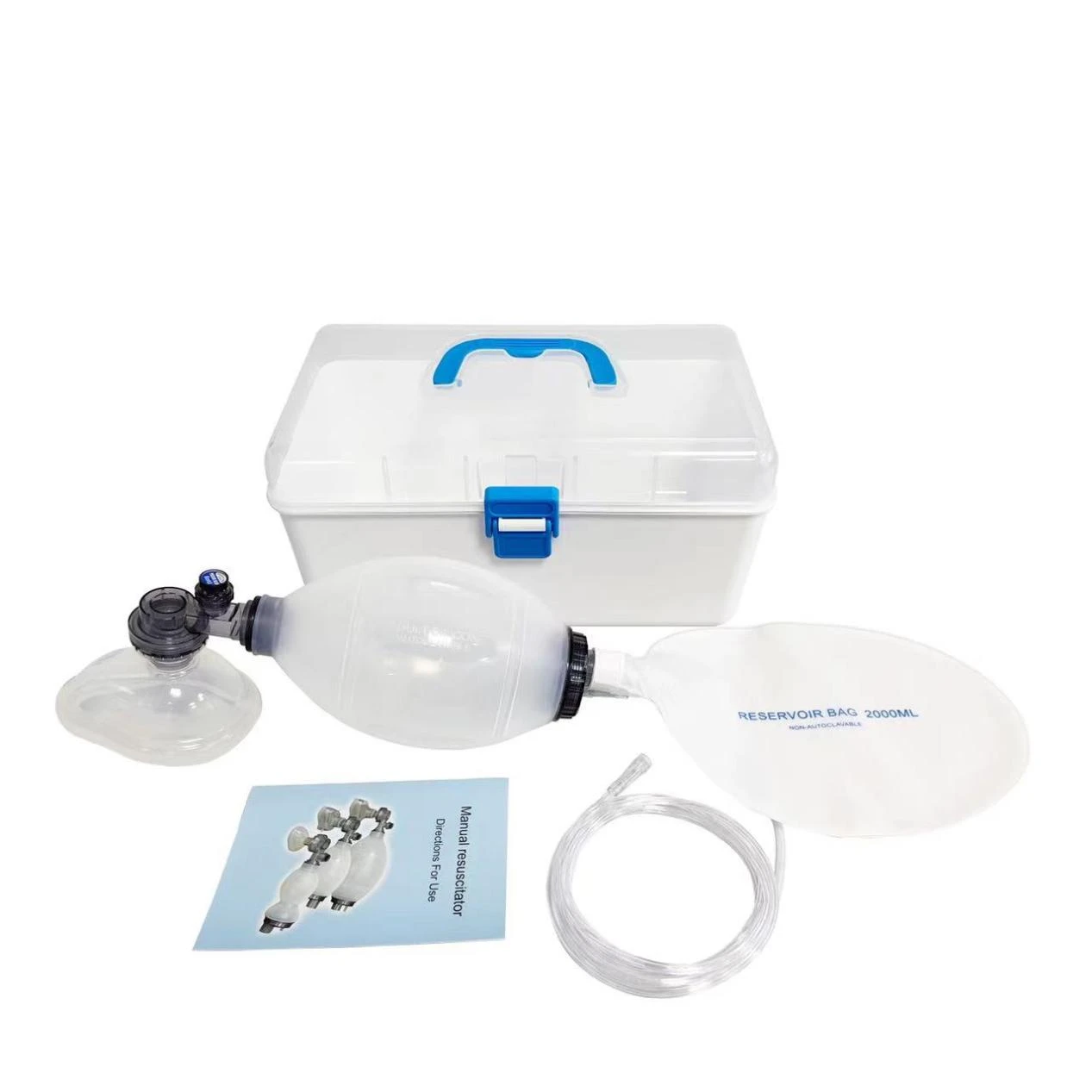
A manual resuscitator is a handheld device consisting of a self-inflating bag, a unidirectional valve, and a mask or a connector for attaching to an endotracheal tube or tracheostomy tube. The device is used to deliver oxygen or room air to the patient's lungs by manually compressing the bag, which forces air through the valve and into the patient's airways.
Components of a Manual Resuscitator:
Self-Inflating Bag:
The bag automatically inflates after being squeezed and is typically made of a durable, flexible material like silicone or PVC. The volume of the bag can vary, with standard sizes being 500 mL for infants, 1000 mL for children, and 1600 mL for adults.
One-Way Valve:
This valve ensures that air flows in only one direction-from the bag to the patient-preventing the backflow of exhaled air into the bag. It also allows for attachment to oxygen supply lines to deliver higher concentrations of oxygen.
Face Mask or Connector:
The mask is placed over the patient's nose and mouth to create a seal, ensuring that air is directed into the lungs. In cases where an endotracheal or tracheostomy tube is in place, the resuscitator is connected directly to the tube.
Reservoir Bag or Tube:
Some manual resuscitators include a reservoir bag or tube that connects to an oxygen supply. This allows the delivery of nearly 100% oxygen, which is crucial in certain medical emergencies.
Usage of a Manual Resuscitator:
Emergency Ventilation:
Manual resuscitators are used during cardiopulmonary resuscitation (CPR) to provide ventilation when a patient is not breathing or is breathing inadequately. The device is essential in maintaining oxygenation until more advanced airway management can be implemented.
Pre-Hospital Care:
In emergency medical services (EMS), manual resuscitators are standard equipment. Paramedics and emergency medical technicians use them to ventilate patients en route to the hospital.
Anesthesia:
During surgeries, manual resuscitators are used in anesthesia induction and during recovery when mechanical ventilation is not yet established or as a backup in case of equipment failure.
Transport Ventilation:
When transferring patients between different areas of a hospital or to another facility, manual resuscitators can be used to maintain ventilation during transport.
In-Hospital Resuscitation:
In critical care settings, such as intensive care units (ICUs) and emergency rooms, manual resuscitators are readily available for use in resuscitation scenarios.
Benefits of Manual Resuscitators:
Portability:
Manual resuscitators are compact and lightweight, making them easy to carry and use in various settings, from ambulances to operating rooms.
Simplicity:
The design of a manual resuscitator is straightforward, allowing trained healthcare providers to use it effectively with minimal preparation.
Immediate Response:
In situations where mechanical ventilators are not available or functioning, a manual resuscitator provides an immediate means of delivering life-saving ventilation.
Control Over Ventilation:
The manual nature of the device allows the healthcare provider to control the rate and volume of ventilation, which can be crucial in managing patients with specific respiratory needs.
Manual resuscitators are indispensable tools in emergency medicine, providing a reliable means of ventilation when mechanical ventilation is not an option. Their simplicity, portability, and effectiveness make them essential in a variety of clinical settings. Proper training and usage are crucial to ensuring that these devices provide optimal patient care and improve outcomes in critical situations.
If you have interest, welcome to contact us for more information:
Email: sale2@trifanz.com
Whastapp: 86 13777878580