


Nasopharyngeal Airway
What Is Nasopharyngeal Airway
A nasopharyngeal airway (NPA) device or "nasal trumpet" is a hollow plastic or soft rubber tube that can improve oxygenation and ventilation in cases where bag-valve-mask ventilation is ineffective. NPAs are inserted into the nose and through the posterior pharynx, clearing the airway by displacing the posterior tongue and soft palate. NPAs do not typically cause patients to gag. Thus, this device is recommended over an oropharyngeal airway in patients with an intact gag reflex. NPAs are also helpful when a patient's mouth is difficult to open or access, as in cases of trismus or angioedema.
Advantages of Nasopharyngeal Airway
Facilitating ventilation:By ensuring a direct route for airflow into the pharynx, nasopharyngeal airways facilitate ventilation and improve oxygenation in patients who require respiratory support.
Comfortable:Nasopharyngeal airways are generally well-tolerated by patients, even in conscious individuals, making them suitable for maintaining airway patency without triggering a gag reflex.
Nasal breathing:Nasopharyngeal airways are ideal for patients who primarily breathe through their nose, as they provide a direct route for airflow without interfering with nasal breathing patterns.
Various sizes:Nasopharyngeal airways come in different sizes to accommodate patients of various ages and anatomies, ensuring proper fit and effectiveness in airway management.


Our factory
HangZhou Trifanz Medical Device Co., Ltd is located in the vibrant bio-industrial park of LinPing, Hangzhou. The park enjoys a beautiful environment and convenient transportation. We have own the production site: 1000 square 100,000 GMP clean workshops.
Our certificate
Passed the CE, ISO13485 system certification; can provide OEM / ODM services.
Experienced team
It has its own R&D team. A group of professional and technical personnel with nearly 20 years of experience in the industry.
Our products
Endotracheal tube, laryngeal mask airway, closed suction catheter,anesthesia breathing circuit and so on.
Basic airway management in children and adults includes assessing and managing airway patency, oxygen delivery, and ventilation. All efforts should be taken to maintain airway patency noninvasively unless indications for invasive airway management are apparent. Passive oxygenation by nasal cannula or nonrebreather mask. Noninvasive positive pressure ventilation, as in BVM with a positive-pressure valve, continuous positive airway pressure (CPAP), and bilevel positive airway pressure (BiPAP). Supraglottic airways and laryngeal mask airway. Needle jet ventilation may be used in pediatric patients younger than 8 years. Cricothyroidotomy is appropriate for adults and children older than 8 years. Proper airway management begins by determining the best airway approach for the patient. Factors that can influence airway choice include obesity, macroglossia, evidence of trauma, cervical collar use, presence of a gag reflex, and age. After selecting the airway type, the patient's head is positioned for airway placement.
Methods for head positioning include the following: Head tilt-chin lift maneuver. One hand tilts the forehead while the other lifts the chin. Both actions extend the neck, reduce upper airway obstruction, and align the upper respiratory airways. This maneuver puts the patient in a sniffing position, with the nose pointed upward and forward. Chin lift: Both hands are placed underneath the mandible and chin. The mandible is then lifted until the teeth barely touch. Jaw-thrust maneuver: The spine is maintained in a neutral position. Then, the sides of the mandibular angle are lifted forward to lift the jaw and open the airway. This method is appropriate for individuals with a possible cervical spinal cord injury. Differences exist between the pediatric and adult airways. For example, prepubescent pediatric patients have a large occiput that can hyperflex the neck and obstruct the trachea. The head tilt-chin lift maneuver can correct this problem. However, care must be taken using this maneuver in children who have a weak trachea because neck overextension can also obstruct the airway. The head tilt-chin lift may be inadequate to keep the airway patent in children with a large, floppy tongue. The jaw-thrust maneuver is an alternative for these patients.
Once properly positioned, effective breaths must be delivered mouth-to-mouth or via BVM ventilation. If difficulties are encountered in delivering breaths, airway adjuncts like an oral pharyngeal airway (OPA) device or nasopharyngeal airway (nasopharyngeal airway) may be used to keep the airway patent (see Image. Airway Adjuncts). OPAs are appropriate for unresponsive patients. nasopharyngeal airway devices may be used on both unconscious and awake patients. Thus, nasopharyngeal airways are beneficial if intubation is not indicated or needs to be delayed. nasopharyngeal airway use may also be a temporizing measure if awake intubation is necessary. nasopharyngeal airways are hollow plastic or soft rubber tubes inserted into the nose and posterior pharynx. These devices should not cause patients to gag. Thus, nasopharyngeal airways are the best airway adjuncts for awake patients. These devices are also indicated for semiconscious patients with an intact gag reflex and may not tolerate an OPA. nasopharyngeal airways may also be useful when a patient's mouth is difficult to open, as in cases of angioedema and trismus. However, despite their many applications, nasopharyngeal airways only keep the airway patent in stable patients with spontaneous respirations or serve as a temporizing measure for patients needing an airway.
Intubation was traditionally a commonly performed airway management method among critical care and emergency physicians. However, most clinicians today prefer the intubation route, which has demonstrated better results and fewer complications than the method. Oral and maxillofacial surgery are the only disciplines where intubation is widely used. Studies have since found that using an nasopharyngeal airway before intubation during surgery improves the ease of tube insertion and minimizes bleeding during tube placement.
What Are the Preparations for Using a Nasopharyngeal Airway?
Preparing to insert an nasopharyngeal airway ideally involves steps. The first is obtaining the correct size nasopharyngeal airway. The second is coating the airway device with water-soluble lubricant or anesthetic jelly. However, during emergencies or when resources are scarce, the provider may be unable to prepare adequately and be forced to insert the nasopharyngeal airway or NT tube blindly.
Attaching the pulse oximeter and blood pressure and cardiac monitors. Positioning the patient in the sniffing position. Setting up an end-tidal carbon dioxide monitor (capnography).Placing peripheral intravenous access sites bilaterally. Starting 1 liter of intravenous crystalloid fluid if the patient is not congested or at risk of fluid overload. Preoxygenation via nasal cannula, nonrebreather to increase the patient's oxygen reserve and time to desaturation after sedation or neuromuscular blocker administration. Ensuring that the face mask forms a tight seal around the mouth and nose during preoxygenation.
Having a ready at the bedside. Turning on the wall suction and setting up the suction tubing and yanker. Having a respiratory therapist prepare a ventilator. Preparing sedatives and neuromuscular blockers if required. Preparing a backup airway. Having ET and NT tubes of different sizes on standby. Checking the tube cuff for air leaks. Spraying a topical vasoconstrictor in the bilateral nares to reduce bleeding risk. Coating an nasopharyngeal airway with lidocaine jelly or ointment to anesthetize and lubricate the airway. Placing the correct nasopharyngeal airway into a patent and horizontal naris. Once a secure airway has been established, the nasopharyngeal airway should be removed immediately to minimize complications.

How to Insert a Nasopharyngeal Airway Correctly
Prepare the equipment
Assemble all necessary equipment in a clean and well-lit environment. Ensure that the nasopharyngeal airway (npa) selected is of the appropriate size for the patient, considering factors such as age and anatomical variations. Put on protective gloves to maintain aseptic conditions.
Position the patient
Carefully place the patient in a supine position on a firm surface. Tilt their head backward slightly, aligning the neck and throat to facilitate a straight passage for the nasopharyngeal airway. This positioning optimizes the ease of insertion and helps maintain a patent airway.
Measure for proper sizing
Use a ruler or a dedicated sizing guide to measure the nasopharyngeal airway against the patient's face. Confirm that the selected tube extends from the tip of the nose to the earlobe. Proper sizing ensures optimal effectiveness and comfort during insertion, emphasizing patient safety.
Apply lubricant
Apply a liberal amount of water-soluble lubricant to the distal end of the nasopharyngeal airway. Ensure uniform coverage to minimize friction and ease the insertion process. Lubrication is critical for patient comfort and helps prevent potential trauma during insertion.
Choose the appropriate nostril
Evaluate both nostrils for patency, and select the one offering the least resistance. This strategic choice ensures smoother insertion and minimizes discomfort for the patient. Sequentially, this decision-making process is fundamental for successful nasopharyngeal airway placement.
Insertion process
Holding the lubricated end, gently insert the nasopharyngeal airway into the chosen nostril with a slow, twisting motion. Follow the natural curve of the airway to avoid unnecessary resistance. Continuous communication with the patient is critical, ensuring they are informed and cooperative during the procedure.
Monitor patient response
Vigilantly observe the patient for signs of distress or discomfort throughout the insertion process. Be prepared to pause or adjust the procedure based on their responses. Optimizing the subordinate text underscores the importance of a responsive and patient-centered approach.
Assess placement
Confirm proper placement by assessing the level of resistance encountered during insertion. Observe the length of the tube to ensure it reaches the appropriate depth without going too far. Verify that the flared end rests comfortably at the entrance of the nostril.
Secure in place
Once the nasopharyngeal airway is correctly positioned, use tape to secure the proximal end of the patient's cheek. This step prevents accidental dislodgment and provides stability, ensuring the nasopharyngeal airway remains in the intended position.
Reassess and document
After insertion, thoroughly reassess the patient's airway and respiratory status. Document the procedure details, including the size of the nasopharyngeal airway, the selected nostril, and any observations made during the process. This documentation is crucial for maintaining accurate and comprehensive medical records.
A patient’s bed card team should determine whether a nasopharyngeal airway is required and order accordingly, ensuring the appropriate size and length are included. Common indications for patient’s in a ward setting: Respiratory distress from upper airway obstructions and increased wob. Airway obstruction/obstructive episodes noted by medical, nursing, or allied health staff. Airway complications with episodes of mild stertor, causing a decrease in sp02. Significant respiratory distress, further evidenced by hypercapnia on blood gas results. Indications for insertion of nasopharyngeal airway (surgical patients). Elective nasopharyngeal airway insertion: Nasopharyngeal airway’ s are inserted at the end of surgery when the patient is anaesthetised. This enables the nasopharyngeal airway to be inserted under direct vision to the correct length.
Nasopharyngeal airway’ s are commonly inserted electively at the end of surgery to prevent problems with postoperative airway obstruction, including: Micrognathia associated with congenital syndromes ie. Pierre robin sequence, treacher collins, stickler syndrome. Children with muscular dystrophy or other syndromes affecting the airway. Children who have pre-existing and children post operatively where upper airway structures are expected to become swollen. Children who develop airway obstruction with loss of pharyngeal tone following induction of anaesthesia. Children who have a nasopharyngeal airway inserted intra/postoperatively, generally only require it for the first postoperative night. It is then removed the next day as directed by the bed card team.
Airway complications postoperatively from episodes of mild stertor, causing a decrease in sp02, requiring intervention. Obstructive episodes noted by medical, nursing, or allied health staff. Significant respiratory distress and work of breathing, further evidenced by hypercapnia on blood gas results. If an nasopharyngeal airway is accidentally removed, reinsertion should only be done after consultation with surgical team, to avoid damaging the operative site.
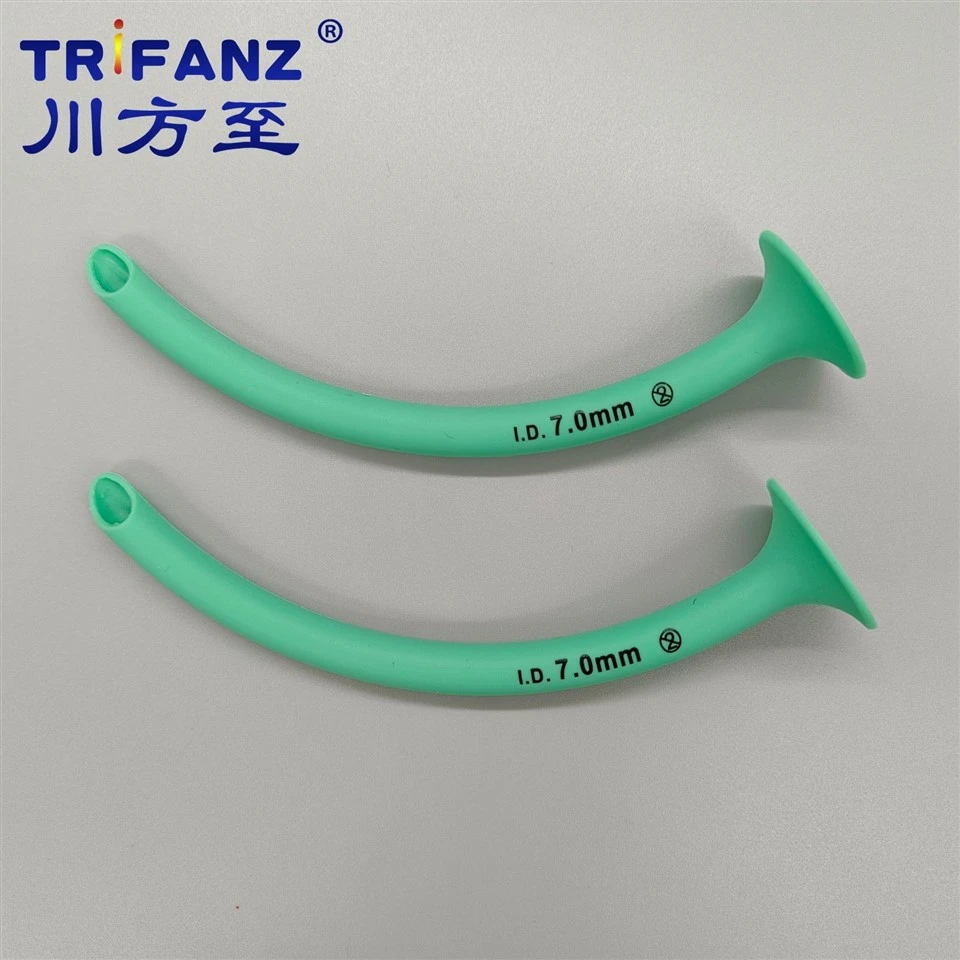
The preference is to insert an nasopharyngeal airway into the right nostril. This is because the natural curve of the nasopharyngeal airway and the flange bevel will open into the pharynx. If the standard nasopharyngeal airway is put in on the left nostril the bevel will sit against the pharyngeal wall and could become occluded. Explain rationale and procedure to child and family. Give the family the option of assisting or obtain other assistance if necessary. Check that the suction system is functioning and correct suction pressure is set. Attach a pulse oximeter to the child. If appropriate and with the help of the caregiver or assistant, gently wrap the child with a sheet or blanket to immobilise their arms and hands. Position the child on either side or back, at a 30-40-degree angle to facilitate and open the airway. Wash hands and put on gloves. Consider clearing the nostril by suctioning prior to insertion. A topical nasal decongestant may be applied 5min before nasopharyngeal airway insertion.
Frequently check the nostril for blanching or redness. If blanching occurs the airway is too tight and a smaller size is required. Patency of the nasopharyngeal airway can be checked by holding a metal teaspoon a few millimetres in front of the opening of the nasopharyngeal airway. As the child breathes the airflow through the nasopharyngeal airway will make a small patch of condensation (fogging) on the surface of the teaspoon. If the nasopharyngeal airway is blocked try using 0.9% NaCl drops (0.5 ml) and performing a suction. If this is not successful after 2 attempts the nasopharyngeal airway should be removed and a new nasopharyngeal airway inserted. The nasopharyngeal airway does not need to be routinely changed, however if it blocks or there is a build-up of crusting around the opening then it can be changed. The removed nasopharyngeal airway should be washed in soapy water, rinsed clean and kept as a spare tube (unless it shows signs of wear or has stuck on secretions that cannot be removed).
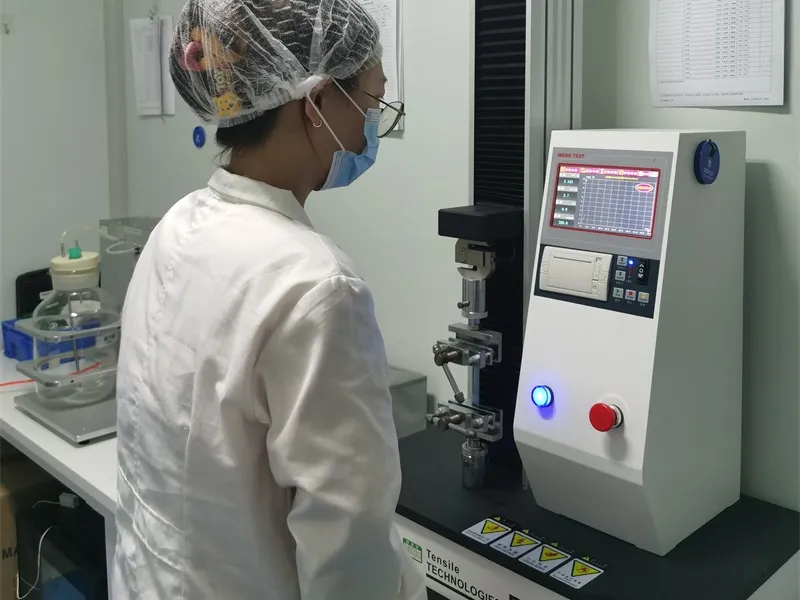
HangZhou Trifanz Medical Device Co., Ltd is located in the vibrant bio-industrial park of LinPing, Hangzhou. The park enjoys a beautiful environment and convenient transportation. It is adjacent to Shanghai, Ningbo and other important ports. The company is an integrated science and technology innovation enterprise, mainly engaged in the research, development, production and sales of medical catheters in the fields of respiration, anesthesia, and severe diseases. It has its own R&D team: a group of professional and technical personnel with nearly 20 years of experience in the industry; own The production site: 1000 square 100,000 GMP clean workshops; among the company's employees, more than 80% of college and university staff account for the company's production and operation activities in strict accordance with national and international requirements to run the quality management system cloud operation, passed the CE, ISO13485 system certification; can provide OEM / ODM services.



Certificate


video
FAQ
We're professional nasopharyngeal airway manufacturers and suppliers in China, specialized in providing high quality custom service. We warmly welcome you to wholesale cheap nasopharyngeal airway from our factory.