


Suction Catheter
What Is Suction Catheter
Atraumatic tip and smooth design for patient comfort and seamless insertion.This suction catheter is an essential medical tool meticulously designed to ensure the clear and unobstructed breathing of patients. This flexible, elongated tube excels in the swift and efficient removal of respiratory secretions from the airway, thereby preventing any potential blockages. Designed with the clinician's ease in mind, it features an atraumatic tip with a double offset eye, ensuring uninterrupted functionality. The smooth exterior ensures patient comfort upon insertion. Its versatile connector ends complement its functionality, ensuring its compatibility across various suction units. The catheter's colour-coded design aids in swift size identification.
Advantages of Suction Catheter
Atraumatic tip:Each catheter boasts a gentle, atraumatic tip with a double offset eye, providing a safeguard should the distal hole become occluded.
Smooth insertion:Designed with a smooth exterior, ensuring patients experience a comfortable and hassle-free insertion process.
Versatile compatibility:Various connector ends are available, making it adaptable with an extensive range of suction units and aspirators.
Easy size identification:The catheters are colour-coded by size, facilitating swift and effortless visual identification. Hygienic Packaging: Each catheter is supplied in sterile, individual peel pouches, ensuring maximum hygiene and ease of access.
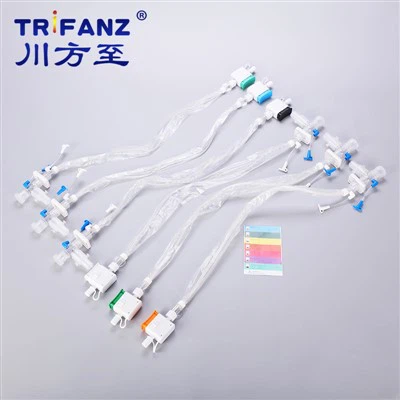
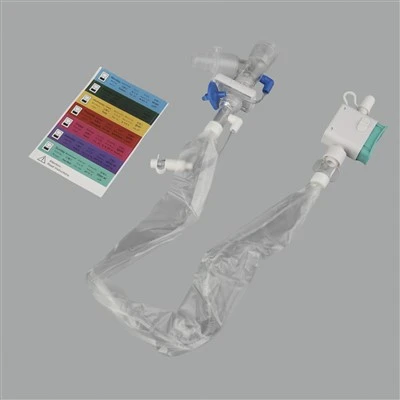
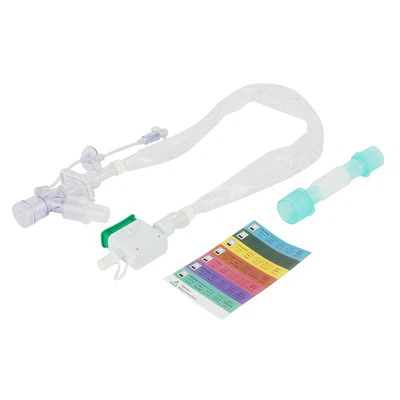
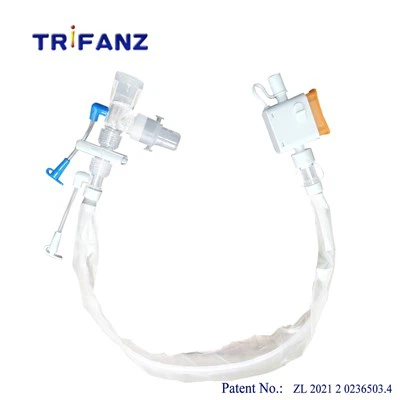


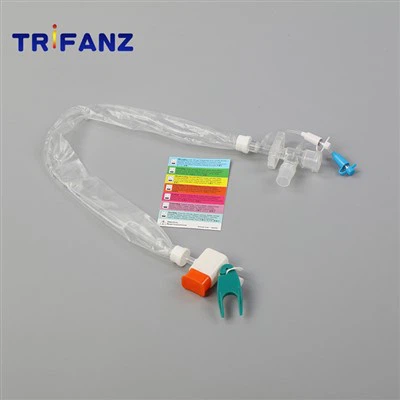
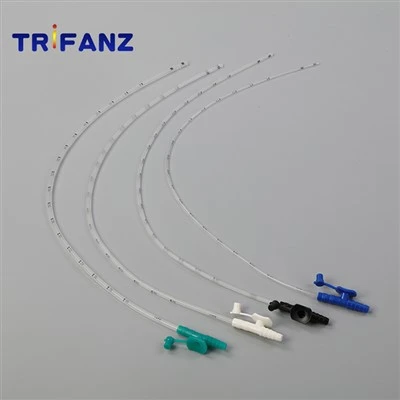
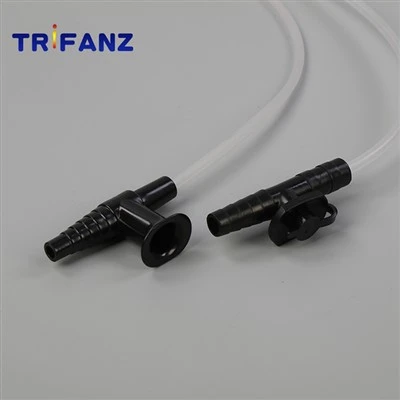
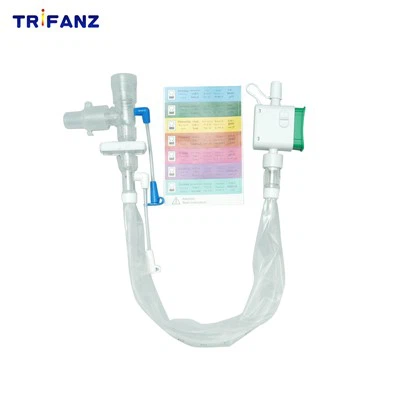
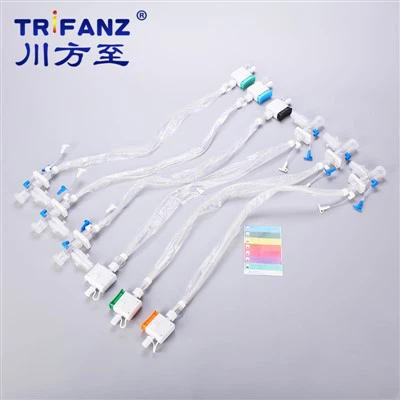
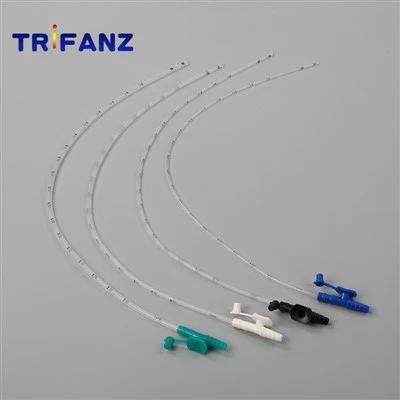
Our factory
HangZhou Trifanz Medical Device Co., Ltd is located in the vibrant bio-industrial park of LinPing, Hangzhou. The park enjoys a beautiful environment and convenient transportation. We have own the production site: 1000 square 100,000 GMP clean workshops.
Our certificate
Passed the CE, ISO13485 system certification; can provide OEM / ODM services.
Experienced team
It has its own R&D team. A group of professional and technical personnel with nearly 20 years of experience in the industry.
Our products
Endotracheal tube, laryngeal mask airway, closed suction catheter,anesthesia breathing circuit and so on.
Uses of Suction Catheter
Aspiration prevention and treatment
A suction catheter can help prevent aspiration in a patient undergoing dental treatment, especially if the patient is in an altered state of consciousness. Patients at risk of aspiration--such as those with pneumonia, continuous vomiting, or a bloody airway--may need suctioning to prevent aspiration. In patients who have already aspirated, prompt suctioning can restore normal airway function and reduce the quantity of contaminants that make it to the lungs. See for yourself how a ducanto catheter can help during emergency airway management.
Maintaining a patent airway in hospital settings
In hospital settings, especially during surgery, suction catheters can help maintain a patent airway. This lowers the risks associated with general anesthesia, especially in patients with respiratory disorders or a high risk of aspiration.
Management of chronic respiratory conditions
Chronic respiratory conditions such as chronic obstructive pulmonary disease (copd) increase the risk of aspiration, pneumonia, and secondary respiratory infections. A suction catheter can help clear the airway in these patients, especially when they are unable to clear secretions on their own. Over time, patients may need routine clearance of the airway. In copd, patients produce excessive amounts of sputum that can occlude the airway and make breathing difficult. Suctioning reduces coughing, maintains a clear airway, and can prevent complications such as hypoxia.
Treatment of respiratory emergencies
Emergency suctioning can be life-saving in a wide variety of respiratory emergencies. Prompt suctioning may protect the airway for some choking victims, especially when inflammation and swelling threaten to close the airway. People suffering from acute respiratory infections may also benefit from suction catheters, particularly when they cannot clear their own airway. Anaphylaxis can close the airway, but suctioning may help. Likewise, drowning survivors may benefit from a suction catheter to prevent aspiration, manage airway secretions, and clear the airway.
Pediatric airway management
Respiratory emergencies are one of the most common life-threatening conditions in pediatric patients. Neonates may require immediate suctioning to support breathing, and may need ongoing suctioning, especially if they are born very premature. Infants and children may require suctioning when they have respiratory infections, choking episodes, or if they have neurological conditions that impede normal breathing. The pediatric airway is smaller and anatomically distinct, so providers must choose a smaller catheter and regularly train on pediatric models.
Treating patients with artificial airways
Intubated patients, tracheostomy patients, and those on mechanical ventilators may need regular suctioning to clear airway secretions. In addition to the usual indications for suctioning, these patients may require suctioning at regular intervals.
Managing airway trauma
Airway trauma, such as a blow to the throat, an object lodged in the throat, or a recent internal injury can occlude the airway. If the patient is bleeding, aspiration and choking are a risk. In some cases, airway trauma accompanies other forms of trauma, such as head injury, that inhibit a patient’ s ability to breathe on their own or clear respiratory secretions. In these instances, a suction catheter can save lives.The right suction machine is critical for saving lives and ensuring optimal effectiveness of your suction catheter. A portable emergency suction machine allows you to safely tend to patients without moving them. This can save lives in tactical scenarios, following serious traumatic injuries, and for patients who cannot easily be transported.
How to Use the Suction Catheters
Size selection
Prior to use, ensure you've chosen the correct size of the catheter.
Package inspection
Carefully open the packaging and extract the device. If the package appears damaged in any way, refrain from using the device. It's imperative to follow stringent infection prevention protocols to minimise contamination risks.
Device check
Always verify the catheter's patency before each use.
Connection
Attach the catheter's universal funnel connector to a regulated vacuum source.
Insertion
Gently introduce the suction catheter without applying any suction pressure.
Handling resistance
Should you encounter resistance, avoid using force. It may be necessary to reinsert the catheter.
Monitor vacuum regulator
Confirm that the vacuum regulator is functioning correctly. Ensure the set negative pressures are appropriate to prevent complications such as tissue damage, hypoxia, or atelectasis.
Patient monitoring
Continuously monitor the patient's vital signs before, during, and after aspiration, utilising the appropriate monitoring system.
Introduction to Sizing Information for Suction Catheters
Suction catheters are hollow tubes that extract fluid from a person's airway. They are used in conjunction with a suction machine to remove mucus, saliva, or other debris from the upper airway and trachea. One end of the catheter attaches to an aspirator or collection canister, while the other is placed into a trach tube for extraction. A suction catheter has a valve on the end that allows the user or caregiver to control the flow of suction. Suction catheters have either a chimney valve or a directional valve. A chimney valve has a large opening on the control vent that helps minimize residual suction. A directional valve has a firm but flexible tip that makes it easy to insert and withdraw.
Suction catheters are available in different diameters, known as the French size. It is important to choose the proper French size. If the tube is too small, it may not remove secretions from the airway properly. If the opening is too large, it can block the trach tube and make breathing difficult. Directional valves are color coded, making it easy to identify the French size. Individual suction catheters as well as as suction catheter kits. The kits contain the suction catheter as well as supplies like gloves, a solution cup, or suction catheter tray. The solution cup is flat when it is in the package and pops up when it is ready to use. The tray gives you a clean surface to work from and your supplies can be placed in the tray during suctioning.
Suction catheters come in a range of sizes and lengths. This is to accommodate the differences between people of all ages, builds and sexes. For example, the difference between the tracheal dimensions of neonates and adults is considerable. Using a suction catheter in a range intended for adults on neonates can cause discomfort and significant tracheal trauma. It advised suction catheters should not completely occlude the trachea and allow for the passage of oxygen into the lungs. The general rule is that suction catheters should not exceed 50% of the internal diameter of the tracheal tube.
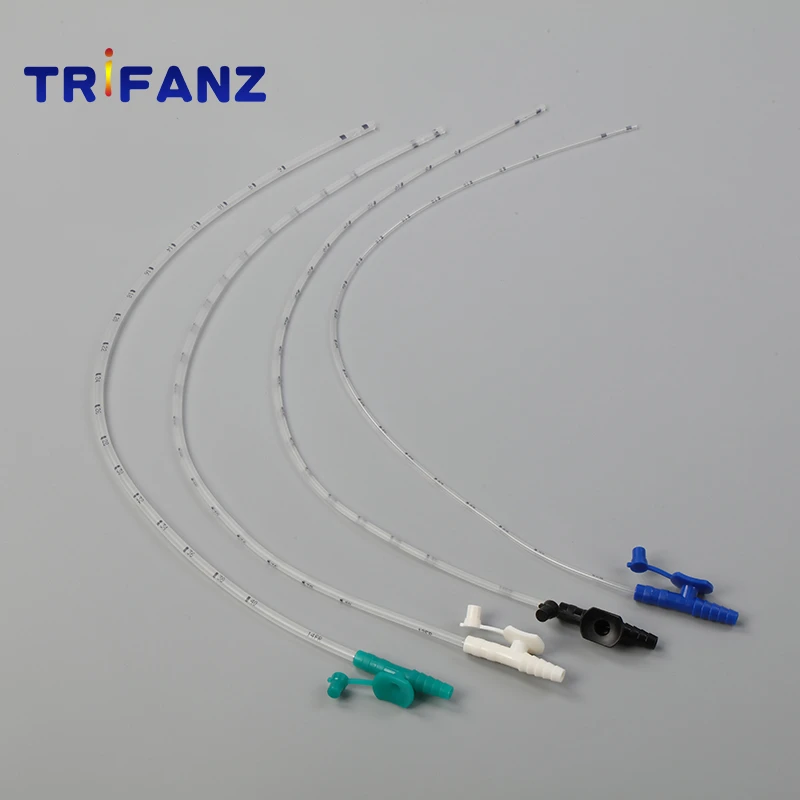
Tip Suctioning and Deep Suctioning Procedure of Suction Catheter
Wash your hands. Turn on the suction machine and connect the suction connection tubing to the machine. Use a clean suction catheter when suctioning the patient. If the suction catheter is to be reused, place it in a container of distilled or sterile water and apply suction for approximately 30 seconds to clear secretions from the inside. Next, rinse the catheter with running water for a few minutes, then soak in a solution of one part vinegar and one part distilled or sterile water for 15 minutes. Stir the solution frequently. Rinse the catheters in cool water and air-dry. Allow the catheters to dry in a clear container. Do not reuse catheters if they become stiff or cracked. Connect the catheter to the suction connection tubing.
Lay the patient flat on his/her back with a small towel/blanket rolled under the shoulders. Some patients may prefer a sitting position, which can also be tried. Wet the catheter with sterile/distilled water for lubrication and to test the suction machine and circuit. Remove the inner cannula from the tracheostomy tube. The patient may not have an inner cannula. There are different types of inner cannulas, so caregivers will need to learn the specific manner to remove the one their patient has. Usually rotating the inner cannula in a specific direction will remove it.Be careful not to accidentally remove the entire tracheostomy tube while removing the inner cannula. Often by securing one hand on the tracheostomy tube’ s flange (neck plate) one can/ will prevent accidental removal.Place the inner cannula in a jar for soaking.
Carefully insert the catheter into the tracheostomy tube following the natural curvature of the tracheostomy tube. The distance to the location of catheter becomes easier to determine with experience. The least traumatic technique is to pre-measure the length of the tracheostomy tube and then introduce the catheter only to that length. For example, if the patient’ s tracheostomy tube is 4 cm long, place the catheter 4 cm into the tracheostomy tube. Often, there will be instances when this technique of suctioning (called tip suctioning) will not clear the patient’ s secretions. For those situations, the catheter may need to be inserted several millimeters beyond the end of the tracheostomy tube (called deep suctioning). With experience, caregivers will be able to judge the distance to insert the tracheostomy tube without measuring.
Place your thumb over the suction vent intermittently while you remove the catheter. Do not leave the catheter in the tracheostomy tube for more than 5-10 seconds since the patient will not be able to breathe well with the catheter in place. Allow the patient to recover from the suctioning and to catch his/her breath. Wait for at least 10 seconds. Suction a small amount of distilled or sterile water with the suction catheter to clear any residual debris or secretions. Insert the inner cannula from extra tracheostomy tube. Turn off suction machine and discard catheter. Clean inner cannula.
Where to Use Suction Catheters
Respiratory therapy
Ideal for patients with tracheostomies to clear secretions that might block the tube, ensuring a clear air passage. Essential for maintaining clear airways in tubes inserted through the mouth or nose into the trachea. Enhances the physician's visibility during procedures by efficiently removing secretions or mucus.
Surgical settings
Particularly useful during thoracic and abdominal surgeries, the catheters aid in maintaining a clear operating field by removing blood, fluids, or debris.
Intensive care units (ICU)
For intubated patients on mechanical ventilation, regular suctioning with these catheters prevents potential lung complications, ensuring their wellbeing.
Emergency scenarios
In instances of trauma, aspiration, or even drowning, these catheters are pivotal for swiftly clearing the airway of foreign materials or secretions to enable proper breathing.
1.Carefully assess the patient
Suctioning is an invasive procedure with a range of potential adverse effects. It should be performed infrequently and following a thorough assessment that determines the clinical indications and needs of the patient.Once suctioning is advised, it is important to explain the procedure to the patient. Allows the clinician to obtain consent from the patient. Helps to alleviate the anxiety of the patient and fosters cooperation, facilitating the removal of secretions. Enables the clinician to monitor the patient’ s wellbeing before suctioning, between passes, and after the procedure.
2.Use PPE
An assessment of the risk of exposure to infectious agents and bodily fluids should be performed before each procedure. Personal protective equipment (PPE) that is suitable for that procedure should be worn to minimise the risk of contamination and infection. Using PPE will ensure safer suction catheter use for both the patient and the clinician.
3.Use the correct suction catheter size
Suctioning can lead to mucosal damage, fluctuating oxygen saturation and a disruption of the cilia in the trachea. It is important to choose a suction catheter that is big enough to clear the secretions, but not big enough to cause unnecessary patient harm. It is recommended that suction catheters not exceed 50% of the internal diameter (lumen) of the tracheal tube. This minimises the risk of mechanical trauma, which can cause injury and bleeding that can lead to infection. An appropriately sized suction catheter may also prevent large amounts of oxygen being evacuated from the lungs all at once, causing a significant drop in oxygen levels.
4.Preoxygenate patient
The oxygen levels of the body can be adversely affected by suctioning. These fluctuations may result in hypoxia, hypoxemia and even atelectasis (partial or full collapse of the lungs). Administering oxygen before and between passes is advised to mitigate the effects of oxygen aspiration during suctioning. Pre- and post-oxygenation should be carried out using a ventilator and last a minimum of 30 seconds. It is important to check the patient’ s oxygen saturation throughout the procedure.
5.Limit the frequency of suctioning
Suctioning is a potentially dangerous procedure if performed too frequently and poorly. Each pass of the suction catheter can have a negative effect on a patient’ s intracranial pressure, oxygen saturation, heart rate and blood pressure. The assessment will determine the frequency of suctioning based on the amount of secretions, the patency of the airways and the clinical status of the patient.
6.Duration of suction catheter passes
It is recommended that suction time be limited to 15 seconds per pass. Time should be left between passes to aid respiratory recovery. It is generally advised that no more than 3 passes should be carried out in one session.
7.Appropriate suction pressure
Selecting a suction catheter with multiple holes, known as ‘eyes,’ at the tip is one of the keys to controlling the pressure. Studies show that suction catheters with two holes are better at distributing pressure and reducing trauma during the procedure. Another important consideration for safer suction catheter use is the amount of negative pressure employed. Clinicians must strike a balance between removing the secretions and limiting trauma to the airways. For this reason, suction pressure should be set as low as is reasonably possible to remove the secretions.
8.Monitor the depth of suction
Another key factor to consider for safer suction catheter use is the depth of insertion. The suction catheter should be inserted into the trachea, no further than the carina. Signs that the appropriate depth of insertion has been reached include feeling resistance against the suction catheter and light coughing. Pushing the catheter beyond the carina can lead to a series of complications, including mucosal trauma and arrhythmias.
HangZhou Trifanz Medical Device Co., Ltd is located in the vibrant bio-industrial park of LinPing, Hangzhou. The park enjoys a beautiful environment and convenient transportation. It is adjacent to Shanghai, Ningbo and other important ports. The company is an integrated science and technology innovation enterprise, mainly engaged in the research, development, production and sales of medical catheters in the fields of respiration, anesthesia, and severe diseases. It has its own R&D team: a group of professional and technical personnel with nearly 20 years of experience in the industry; own The production site: 1000 square 100,000 GMP clean workshops; among the company's employees, more than 80% of college and university staff account for the company's production and operation activities in strict accordance with national and international requirements to run the quality management system cloud operation, passed the CE, ISO13485 system certification; can provide OEM / ODM services.

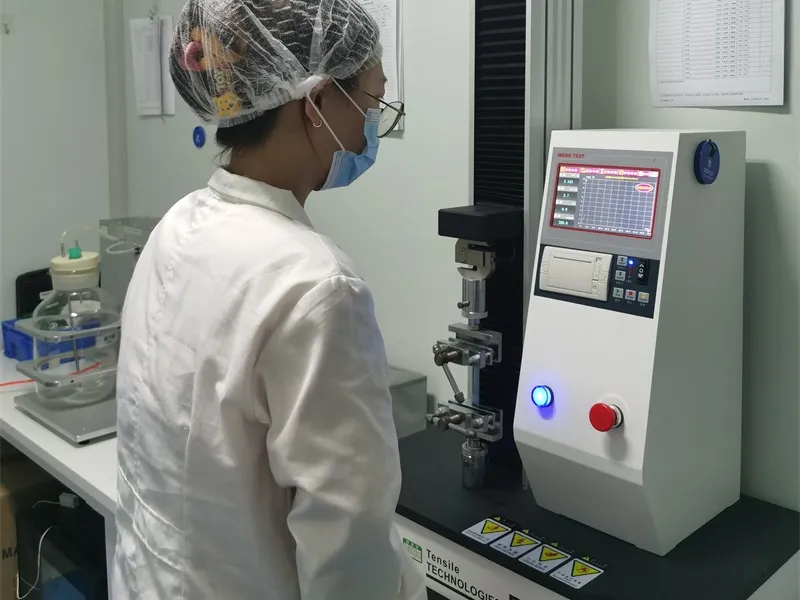


Certificate


video
FAQ
We're professional suction catheter manufacturers and suppliers in China, specialized in providing high quality custom service. We warmly welcome you to wholesale cheap suction catheter from our factory.