


Endotracheal Tube
What Is Trifanz Endotracheal Tube
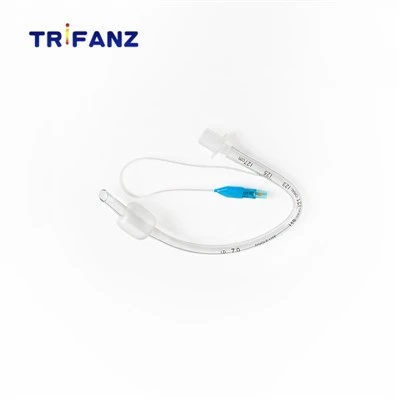
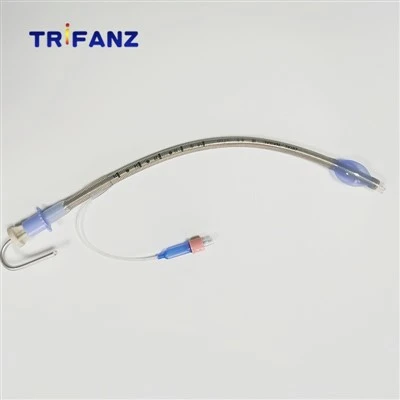
Trifanz Endotracheal Tubes, manufactured at our source factory in China. Available in both PVC and silicone materials, with standard and reinforced options. Sizes range from 2.0 to 10.0 ID, covering the full spectrum from neonates to adults. Features a high-capacity, low-pressure cuff, a Murphy port, and an X-ray visible line running through the tube. Certified by the Chinese NMPA, CE MDR, and the U.S. FDA, among other international regulatory bodies. We support OEM/ODM customization. For catalogs and quotes, please feel free to call or leave a message.
Advantages of Endotracheal Tube
Facilitates procedures:Endotracheal tubes can facilitate certain procedures, such as bronchoscopy or bronchoalveolar lavage, by providing direct access to the lower airways.
Airway protection:An endotracheal tube can prevent the contents of the stomach from getting into the lungs during a massive gastrointestinal bleed.
Breathing support:An endotracheal tube can support breathing in people with severe pneumonia, a head injury, collapsed lung, respiratory failure, congestive heart failure, acute respiratory distress syndrome (ards), or other conditions that affect breathing.
Monitoring:Endotracheal tubes provide a means to monitor respiratory parameters, such as end-tidal carbon dioxide levels, to assess ventilation effectiveness.




Our factory
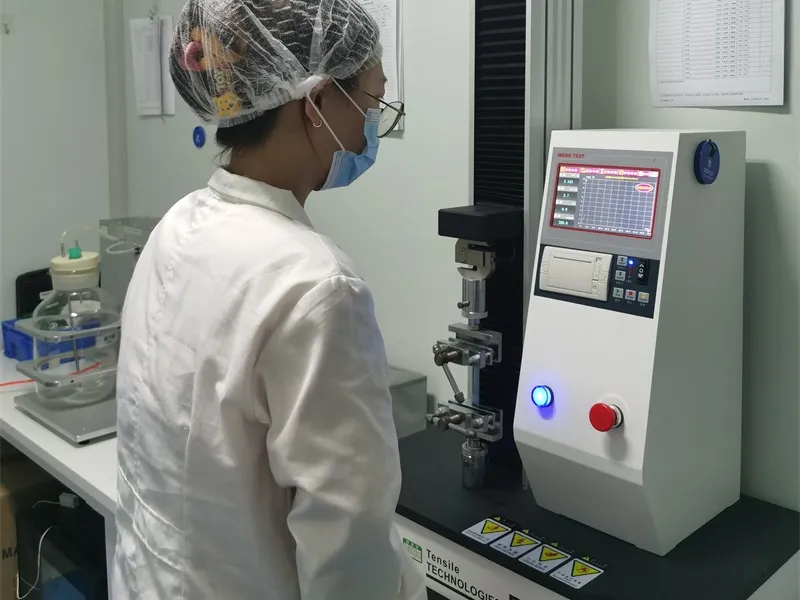
HangZhou Trifanz Medical Device Co., Ltd is located in the vibrant bio-industrial park of LinPing, Hangzhou. The park enjoys a beautiful environment and convenient transportation. We have own the production site: 1000 square 100,000 GMP clean workshops.
Customization & OEM Service
As a professional airway management manufacturer, Trifanz Medical supports:
Custom logo printing on the tube body
Color-coded pilot balloons by size
Custom pouch or blister packaging design
Pre-assembled kit options (Tube + Stylet + Syringe + Lubricant)
Regulatory documentation support for country-specific registration
Our certificate
Passed the CE, ISO13485 system certification; can provide OEM / ODM services.
Experienced team
It has its own R&D team. A group of professional and technical personnel with nearly 20 years of experience in the industry.
Our products
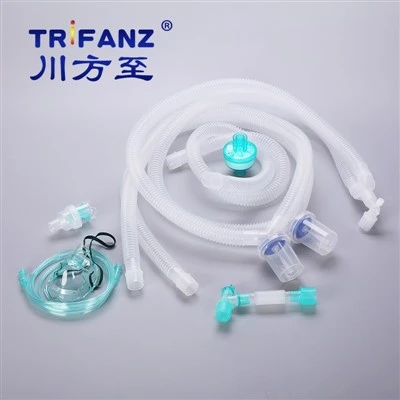
Endotracheal tube, laryngeal mask airway, closed suction catheter,anesthesia breathing circuit and so on.
How Endotracheal Tube Is Done
Before intubation
Before an endotracheal tube is placed. Oxygen may be given to increase blood saturation levels. This ensures there is enough oxygen should the placement take longer than expected. Once the person is unconscious, an oral device may be inserted in the mouth to keep the tongue out of the way so the tube can be placed more easily. If a procedure is done while a person is awake, an antiemetic drug may be given to prevent nausea and vomiting. An oral anesthetic can help numb the gag reflex.
Intubation
During endotracheal intubation, the practitioner usually stands at the head of the table looking toward the person's feet. Pillows or padding may be placed under the person's head or neck to make airway access easier. A lighted scope is inserted into the mouth to view the back of the throat. While holding the jaw open, the practitioner will thread the tube into the throat past the larynx (voice box) and into the lower trachea. The practitioner will check that the tube is properly placed by first listening to lung and abdominal sounds. A mobile chest x-ray can help confirm the placement along with a device called an end-tidal co2 detector that measures carbon dioxide expelled from the lungs.
The balloon cuff is inflated to keep the tube from moving out of place
The external part of the tube is taped to the person's face to avoid slipping. After the tube is connected to the mechanical ventilator, respiratory vital signs are continuously monitored. Secretions may be suctioned occasionally to keep the tube clear.
Endotracheal tube removal
Before removing the tube (extubation) and disconnecting it from the ventilator, the healthcare provider will assess whether the person is able to breathe on their own. To be safe, people are generally weaned off ventilation slowly and continually monitored to ensure that everything is ok. Nurses will check their respiratory rate, level of consciousness, oxygen saturation levels (as measured by a pulse oximeter), and arterial blood gasses (abgs). If indications are good, the tape holding the tube on the face is removed. The balloon cuff is then deflated, and the tube is firmly and steadily pulled out. The removal may feel odd, but it is usually not painful.
Applications of Endotracheal Tubes
General anesthesia:Endotracheal tube intubation is the most commonly used airway during general anesthesia.
Emergency intubation
They are used during emergency intubations when a person is under a non-threatening respiratory compromise that can turn into a life-threatening situation later.
Mechanical ventilation
Providing life support to patients who can’ t breathe independently due to a critical illness.
Respiratory distress syndrome
When fluid builds up in the tiny air sacs (alveoli) of the lungs, and it is impossible to breathe naturally without intubation support.
Postoperative recovery
During the postoperative recovery phase, until the functions are restored and adverse symptoms of a patient are fully resolved, additional breathing support is given through endotracheal intubation.
Neonatal and pediatric care
Premature newborns or babies born with low birth weight. Infants with poor perfusion or in cardiac arrests or airway obstructions are given respiratory support through intubation.
Bronchoscopy and diagnostic procedure
Endotracheal intubation is also done during specific diagnostic tests, such as bronchoscopy, to detect tumors, abnormal airways, or lung cancer.
Patients may need an endotracheal tube for one of several reasons. An endotracheal tube is needed to mechanically ventilate a patient (or breathe for them by a machine). Each breath is pushed into the endotracheal tube and into the lung. An endotracheal tube is also needed if a patient is unconscious or has a brain injury. The brain controls the reflex in the airway that prevents choking when we swallow or eat. This reflex is called the gag reflex. The top of the windpipe has a special opening called the epiglottis. When we swallow food, the epiglottis closes to prevent food from entering the windpipe. When patients are heavily sedated, unconscious or have a brain injury, this protective response is often impaired. Without a gag reflex, saliva would enter the windpipe. This is called aspiration. Aspiration is a serious complication and one of the causes for pneumonia. A less common reason for intubating a patient is to keep the airway open. This is seen most commonly in patients with tumours or growths in the neck or upper chest. The usual route for inserting an endotracheal tube is through the mouth. This is called an oral endotracheal tube. Less frequently, the endotracheal tube is inserted through the nose. This is called a nasal endotracheal tube.
A soft donut shaped balloon is located around the outside of the endotracheal tube. The cuff is inflated with air, and serves two purposes. First, it reduces the number of oral sections that can travel down the outside of the tube and into the lung. This is important because inserting an endotracheal tube into the airway will "wedge" the epiglottis into an open position. Although the cuff reduces the amount of secretions that can enter the lung, it does not completely prevent it. For this reason, patients on ventilators are at risk for developing pneumonia from secretions. The second reason for the cuff is to keep any mechanical breaths from leaking out of the lung around the tube. When we give a patient a breath with the ventilator, we want the breath to go in and out through the tube. Without a cuff, the breath would go in the tube but part of it would escape around the cuff before it was able to reach the lung. As long as the patient has an endotracheal tube in place, the cuff will need to be inflated. An inflated cuff will prevent the patient from being able to speak. Speech is produced when we exhale air through the vocal cords, causing them to vibrate. Because the cuff blocks the flow of air around the tube, speech is not possible. Once the tube is removed (called extubation), the patient will be able to speak. The voice may sound hoarse and the patient may have some throat discomfort for the first few days.
Because the cuff on the breathing tube only reduces (doesn't prevent) secretions from getting past the cuff, we have a number of other strategies that are part of routine practice: Special breathing tubes call Subglottic Drainage Tubes are used which have a low continuous suction port located above the cuff. Dilignet oral care to reduce the number of oral bacteria. Chlorhexidine oral care routine twice per day to decrease the oral bacteria count. Daily assessment for readiness/attempt to reduce sedation. Daily assessment for readiness/attempt to breath spontaneously (without the breathing machine support). Early feeding within 24-48 hours unless contraindicated. Routine elevation of the head of the bed.
What is An Endotracheal Tube: Major Types
Oral endotracheal tube
A standard endotracheal tube with all components, as explained above. Oral endotracheal tubes are used for general purposes and head and neck surgeries.
Nasal tracheal tube
Nasal tracheal tubes are for people who need prolonged intubation. They are placed into the nostrils and gently moved towards the trachea through the nasopharynx.
Reinforced endotracheal tube
Armored or reinforced tracheal tubes come with a reinforced metal coil inside. They are less likely to get compressed or blocked. Making them an ideal choice during complex surgeries.

Components of Endotracheal Tube
Tube tip design
Endotracheal tubes (ETTs) typically have a left-facing bevel at the tip. A bevelled tip will pass much easier through the vocal chords than a a tube with a cross-cut distal opening. The bevel is left-facing rather than right-facing to allow a better view of the ETT tip entering the field of view from right to left/ midline and then passing throught the vocal chords.
Murphy eye
Whilst a tube with a bevelled tip is easier to pass through the vocal chords, it is more likely to occlude when the bevelled opening makes contact with the tracheal wall than a tube with a cross-cut distal opening. The Murphy eye provides an alternate gas passage way should this type of occlusion at the tip occur.
Tracheal cuff
Most endotracheal tubes for use in adults have a tracheal cuff near their distal end. Cuff-less ETTs are also available, and a more commonly used in pediatric patients.
Cuff design
There are generally speaking two types of endotracheal tube cuffs in use, high volume- low pressure cuffs and low volume- high pressure cuffs.
Valve and pilot balloon
The cuff is inflated through a spring-loaded valve with a Luer lock connector. Attached to the valve is a pilot balloon which allows for (rough) tactile and visual confirmation of cuff inflation after intubation or deflation just before extubation.
Connector
The proximal tip of the ETT has a standard 15mm connector attached to it which allows attachment of a variety of breathing systems and anesthetic circuits. 15mm is the outside diameter of the connector.
Markings on the tube
Depending on type and manufacturer ET tubes have several markings on the outside. The ones pretty much all ET tubes have is the size (measured as the inner diameter in mm) and length markings (measured in cm from the tip). In addition, some manufacturers print the outer diameter (in mm) on the tube as well.
Radio-opaque line
Many ET tube include a radio-opaque line which extends all the way to the tip. This is helpful when you want to confirm an adequate tube position on a chest X-ray as the rest of the tube is not going to be visible.
Magill curve
Most ETTs have a pre-formed curve, called the Magill curve, which makes tube insertion easier as the curve follows the anatomy of the upper airway.
Introduction to Materials and Dimensions of Endotracheal Tube
Endotracheal tubes (ETT) are an essential and familiar element of anesthesiology practice. The presence of an ETT maintains airway patency, permits oxygenation and ventilation, allows for suctioning of secretions, lowers the risk of aspiration of gastric contents or oropharyngeal secretions, and facilitates the use of inhalation anesthetics.
The most commonly used ETT material is polyvinyl chloride (PVC), a transparent plastic that allows the visualization of exhalational condensation (“breath fogging”), secretions, and other foreign materials within the tube. PVC is a semi-rigid material at room temperature, but relatively more pliable as it warms following placement in the trachea, which permits easy manipulation of the tube tip during intubation while reducing the risk of mucosal ischemia following placement. Although not used as commonly, ETTs made of other materials, including nylon, silicone, and Teflon, are also available in the United States.
The size of an ETT signifies the inner diameter of its lumen in millimeters. Available sizes range from 2.0 to 12.0 mm in 0.5 mm increments. For oral intubations, a 7.0-7.5 ETT is generally appropriate for an average woman and a 7.5-8.5 ETT for an average man. However, the appropriate tube size is a multifactorial clinical decision based on patient height and weight, type of procedure or surgery, and the presence of pulmonary or airway disease. For nasal intubations, a reduction in size of 0.5-1.0 mm is appropriate. Length is directly proportional to the ETT size. Nasotracheal tubes are approximately 2 cm shorter than orotracheal tubes. Because anatomic variations of tracheas can be difficult to predict, several sizes of ETT should be readily available prior to intubation. The appropriate pediatric tube size can be calculated using the formula ID = age in years/4) + 4. For example, a size of 6.0 ETT would generally be appropriate for an 8-year-old patient.
The patient end, also known as the distal or tracheal end, is placed into the trachea and commonly has an inflatable cuff, which provides a seal that prevents the aspiration of gastric contents and reduces air leakage during positive pressure ventilation. A cuff is inflated through its pilot balloon, which is located at the machine end (or proximal end) of the ETT. The pilot balloon is connected to the cuff by a pilot tube that runs the length of the ETT and contains a one-way valve that maintains the inflation of the cuff once the inflating syringe is removed. Generally, cuffed tubes are used in patients older than 6 years of age. Endotracheal tubes can be beveled or nonbeveled. A bevel allows better visualization of the glottis ahead of the ETT tip while permitting it to more easily pass through the vocal folds. In orotracheal tubes, the bevel faces left and is at a 45 degree.
HangZhou Trifanz Medical Device Co., Ltd is located in the vibrant bio-industrial park of LinPing, Hangzhou. The park enjoys a beautiful environment and convenient transportation. It is adjacent to Shanghai, Ningbo and other important ports. The company is an integrated science and technology innovation enterprise, mainly engaged in the research, development, production and sales of medical catheters in the fields of respiration, anesthesia, and severe diseases. It has its own R&D team: a group of professional and technical personnel with nearly 20 years of experience in the industry; own The production site: 1000 square 100,000 GMP clean workshops; among the company's employees, more than 80% of college and university staff account for the company's production and operation activities in strict accordance with national and international requirements to run the quality management system cloud operation, passed the CE, ISO13485 system certification; can provide OEM / ODM services.



Certificate


video
FAQ
We're professional endotracheal tube manufacturers and suppliers in China, specialized in providing high quality custom service. We warmly welcome you to wholesale cheap endotracheal tube from our factory.
Anesthesia Circuits Co axial circuit, China coaxial anesthesia circuit manufacturers, coaxial circuit