


Oxygen Masks
What Are Oxygen Masks
An oxygen mask is a mask that provides a method to transfer breathing oxygen gas from a storage tank to the lungs. Oxygen masks may cover only the nose and mouth (oral nasal mask) or the entire face (full-face mask). They may be made of plastic, silicone, or rubber. In certain circumstances, oxygen may be delivered via a nasal cannula instead of a mask. Indications of inadequate oxygenation include dyspnea, cyanosis, tachypnea, accessory muscle work, tachycardia and hypertension. Oxygen administration can also be used for chronic administration for patients with advance cardiopulmonary disease and can be utilized during diagnostic assessment.
Advantages of Oxygen Masks
Reduces risk of CO2 rebreathing:During exhalation, the mask openings allow expired carbon dioxide to escape.
Reduces risk of aspiration:Open Mask design minimizes the potential of emesis being aspirated.
Clinician time savings:Preventable saturation alarm conditions due to patient non-compliance, time wasted looking for and setting up alternative traditional oxygen devices and the potential errors that can occur will all be reduced. Along with its ease of use, allowing multiple types of clinicians to titrate oxygen therapy intuitively, clinicians will save more of their work time to be able to dedicate to their most critically ill patients.
Uninterrupted oxygen therapy:Patient communication, care and oral based therapies are possible without removing the mask and interrupting delivery of oxygen.


Our factory
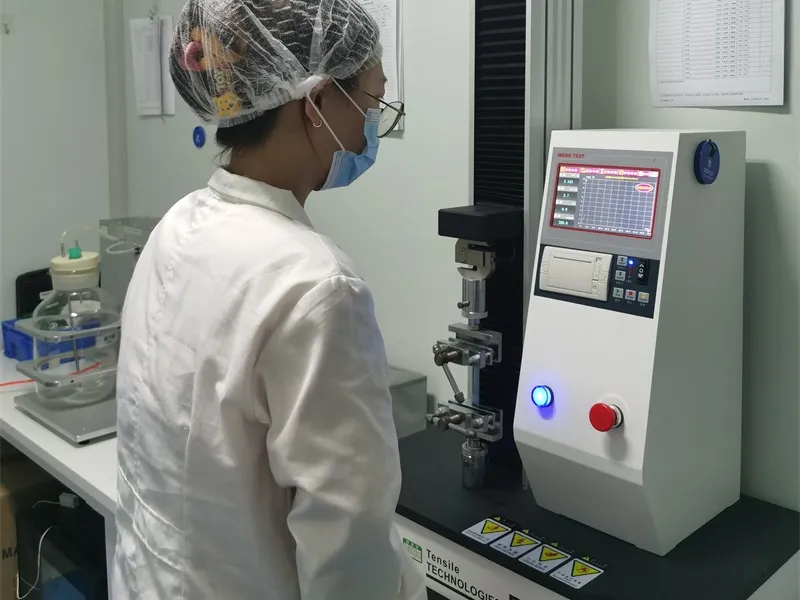
HangZhou Trifanz Medical Device Co., Ltd is located in the vibrant bio-industrial park of LinPing, Hangzhou. The park enjoys a beautiful environment and convenient transportation. We have own the production site: 1000 square 100,000 GMP clean workshops.
Our certificate
Passed the CE, ISO13485 system certification; can provide OEM / ODM services.
Experienced team
It has its own R&D team. A group of professional and technical personnel with nearly 20 years of experience in the industry.
Our products
Endotracheal tube, laryngeal mask airway, closed suction catheter,anesthesia breathing circuit and so on.
How to Use Oxygen Masks at Home
Position the mask so the hollow side is facing you
Hold the mask out in front of you, then rotate it so you’ re able to put your face into it. Make sure the wider end is on the bottom, since that is where your mouth will go. Hold onto the elastic strap coming out from the sides of the mask for now. There are a few different types of mask, but they all have the same basic shape and are put on the same way. Home oxygen masks are very similar to the ones used in hospitals and other medical settings.
Loop the strap over your head to tuck behind your ears
Raise the strap until it’ s behind your head, then lower it back down. Keep it in the space between your ears and your head. It’ s very similar to wearing glasses. The strap typically stays attached to the mask and isn’ t adjustable at all, so you don’ t have to do anything extra to it. Make sure that the oxygen tube on the chin of the mask isn’ t kinked or coiled. If it is, you may have to take the mask back off to straighten it out.
Place the mask snugly over your nose and mouth
Adjust the mask until it’ s comfortable against your face. It will rest firmly against your skin. It should form a seal around your nose and mouth, so reposition it if it feels loose or uncomfortable. The mask might make you feel a little warm or trapped. However, it has to make an airtight seal over both your mouth and nose to work. If it’ s still uncomfortable after using it for a few days, talk to your doctor about it.
Breathe normally to ensure that the mask is working
Take a few deep breaths in and out. You will be able to feel the oxygen coming through the tube. If you aren’ t getting enough oxygen from it, make sure that the mask has created a seal around your nose and mouth. When the mask is working, you will also be able to hear it hissing. If it isn’ t hissing, then check the oxygen tank to make sure it’ s turned on. While you’ re using a mask, stay away from cigarettes and open flames that could spark a fire.
What Are the Different Types of Oxygen Masks?
Utilization of nasal cannula
low-flow oxygen delivery systems consist of nasal cannula, nasal catheters and transtracheal catheters. They are designed to provide supplemental oxygen that is often less than the patient’s total minute ventilation. Because the patient’ s minute ventilation exceeds flow, the oxygen delivered by the device will be diluted with ambient air and thus the inspired oxygen delivery is less than anticipated. The standard nasal cannula delivers an fio2 of 24-44% at supply flows ranging from 1-8 liters per minute (lpm). The formula is fio2 = 20% + (4 × oxygen liter flow). The fio2 is influenced by breath rate, tidal volume and pathophysiology. The slower the inspiratory flow, the higher the fio2; the faster the inspiratory flow, the lower the fio2. A nasal cannula is not recommended for acute severe hypoxemia because the delivered oxygen percentage is very inconsistent. The patient’ s upper airway acts as an oxygen reservoir for the nasal cannula. A humidification device is recommended for flows greater than 4 lpm to insure humidification of the dry inspired gas. Nasal cannulas are best used for patients who have relatively stable respiratory pattern, who require low oxygen percentage, or who are in need of supplemental oxygen during an operative or diagnostic procedure, or for home care uses.
Simple oxygen mask or non-rebreather oxygen face mask
Reservoir systems can gather and store oxygen during inspiration and exhalation. When patients’ minute ventilation flow exceeds the device delivery flow they can draw from the reservoir anytime. To increase the oxygen concentration delivered, often a mask reservoir is utilized. The volume of the oxygen face mask is approximately 100-300 cm3 depending on size. It can deliver an fio2 of 40-60% at 5-10 liters. The fio2 is influenced by breath rate, tidal volume and pathology. The face oxygen masks are also great alternatives for patients with nasal irritations or epistaxis or if they are strictly mouth breathers. A simple oxygen mask should be utilized for just a few hours because of the low humidity delivered and the drying effects of the oxygen gas. This device is best used for short-term emergencies, operative procedures.
Venturi oxygen mask or aerosol mask
High-flow oxygen delivery systems provide a given oxygen concentration at a flow equaling or exceeding the patient’ s inspiratory flow demand. An exact delivered fio2 can be achieved if the delivered flow exceeds the patient’ s total flow. A venturi mask can create high-flow enriched oxygen of a desired concentration as it mixes oxygen with room air. It produces an accurate and constant fio2.The oxygen concentration level are typically set at 24, 28, 31, 35 and 40% respectively .The venturi mask is often employed when the clinician has a concern about co2 retention or when respiratory drive is inconsistent. And it is often used in the copd patient population where the risk of knocking out the patient’ s hypoxic drive is of concern. An aerosol generating device can deliver fio2 from 21 to 100% depending on the set up. The desired fio2 is selected by adjusting an entrainment collar located on top of the aerosol container and the flow is often set at 10 lpm. There’ s a humidity device connected to the flow meter, and wide bore tubing connects this to the patient’ s mask. Wide bore tubing and the reservoir bag are placed in line to act as an oxygen reservoir to ensure that an exact high fio2 is delivered. This device adds water content to the patient and can assist in liquefying retained secretions. This oxygen delivery option is ideal for patients with tracheotomies because it allows for inspired air to be oxygenated, humidified, and even heated if necessary. They can be hooked up to an aerosol mask, tracheotomy mask, and even a t-piece. During inhalation, an aerosol mist should be seen coming from the mask or reservoir. To ensure accurate oxygen administration via this system, an oxygen analyzer should be used. This device can be used to ensure a precise oxygen delivery and also maintain humidification of artificial airways.
Basic Knowledge About Rebreather Oxygen Masks
The main difference between the two oxygen oxygen masks is in how much recycled air you rebreathe. A partial rebreather oxygen mask has two-way valves instead of one-way valves. This means you rebreathe a small amount of outside air. With a non-rebreather oxygen mask, the one-way valve doesn’ t allow you to breathe in any outside air. Because of this, a partial rebreather oxygen mask doesn’ t have the same risk of suffocation as a non-rebreather oxygen mask. The FIO2 of a partial rebreather oxygen mask is slightly less than a non-rebreather oxygen mask.
Oxygen flows from the oxygen tank to the reservoir bag through tubing. A one-way valve connects the bag to the face oxygen mask. The face oxygen mask covers your nose and mouth and forms a tight seal against your skin. When you breathe, you breathe just the air from the bag and oxygen tank. The one-way valves on a non-rebreather oxygen mask prevent you from breathing in any other air. They also remove exhaled air out of the oxygen mask so it doesn’ t go into the reservoir bag and dilute the oxygen.
A non-rebreather oxygen mask is meant for temporary use when you need a lot of oxygen fast. It’ s not an oxygen therapy that you would use long term or at home. There are other types of oxygen delivery devices that work better in those situations and don’ t carry the risk of suffocation. Because a non-rebreather oxygen mask relies solely on an oxygen supply, once the supply runs out, a person could suffocate. How long this takes depends on the size of the oxygen tank. A healthcare provider will monitor you while using a non-rebreather oxygen mask. A non-rebreather oxygen mask typically has a flow rate of about 12 to 15 liters of oxygen per minute.
Can I use a non-rebreather oxygen mask at home? No, you don’ t use a non-rebreather oxygen mask at home. Healthcare providers in a hospital or emergency department use non-rebreather oxygen oxygen masks. There are better options for home oxygen therapy that your healthcare provider can discuss with you. The main benefit of a non-rebreather oxygen mask is that it delivers a high concentration of oxygen quickly. This is especially helpful in situations where a person needs extra oxygen due to dangerously low blood oxygen levels.

A nasal cannula is a simple, effective, comfortable device for delivering low-flow oxygen. It consists of two prongs protruding from the center of a disposable tube and inserts into the nostrils. The nasal cannula allows breathing through the mouth or nose, is available for all age groups, and is adequate for short- or long-term use. Compared with other oxygen delivery systems, a nasal cannula decreases a patient’ s feeling of claustrophobia, but it may not be suitable for mouth breathers. Cannulas are inexpensive, disposable, and easily accepted by most patients. When cannulas are used at higher flow rates, the airway mucosa may dry. A humidifier filled with sterile water should be used to help prevent drying of the nasal and oral mucous membranes if the flow rate is greater than 4 L/min. Approximate FIO2 is estimated by the flow rate. The delivered oxygen percentage varies, depending on the rate and depth of the patient’ s breathing.
A simple face oxygen mask is for short-term, low-flow oxygen therapy. A clear plastic oxygen mask is placed on the patient’ s face with an elastic strap to secure it. The body of the oxygen mask stores oxygen between the patient’ s breaths. Side port openings located on either side of the oxygen mask allow room air to mix with delivered oxygen and allow exhaled air to escape. The percentage of delivered oxygen varies, depending on the rate and depth of the patient’ s breathing. Using a simple oxygen mask with a flow rate less than 5 L/min causes the oxygen mask volume to act as dead space and causes carbon dioxide rebreathing. Some patients find the face oxygen mask uncomfortable, and it must be removed for eating.
A partial rebreathing oxygen mask is a face oxygen mask with a reservoir bag that delivers moderate to higher concentrations of oxygen. Frequent inspection of the reservoir bag is required to ensure that it remains inflated; if it is deflated, exhaled air collects in it, which results in the patient rebreathing large amounts of exhaled carbon dioxide. Side port openings on either side of the oxygen mask vent exhaled air on expiration and allow room air to enter the oxygen mask on inspiration. The delivered oxygen percentage varies, depending on the rate and depth of the patient’ s breathing.
A non-rebreathing oxygen mask is a face oxygen mask with a reservoir bag that delivers high concentrations of oxygen. A one-way inspiratory valve sits on top of the reservoir bag, and a one-way expiratory valve covers one of the side ports on the oxygen mask. During inhalation the expiratory valve over the side port closes, preventing air from entering the oxygen mask while the inspiratory valve on top of the reservoir bag opens, providing oxygen to the patient. During exhalation, the expiratory valve opens allowing exhaled air to vent out of the oxygen mask while the inspiratory valve closes preventing exhaled air from entering the reservoir bag. The open exhalation port is a safety feature designed to allow air to enter the oxygen mask if the oxygen source fails. However, this feature can result in dilution of the inspired oxygen. The delivered oxygen percentage varies, depending on the rate and depth of the patient’ s breathing. A face tent is a shieldlike device that fits under the patient’ s chin and encircles the face. It is used primarily for humidification and for oxygen only when the patient cannot or will not tolerate a tight-fitting oxygen mask. Because it is not close to the patient’ s face, estimating how much oxygen is delivered to the patient is not possible.
HangZhou Trifanz Medical Device Co., Ltd is located in the vibrant bio-industrial park of LinPing, Hangzhou. The park enjoys a beautiful environment and convenient transportation. It is adjacent to Shanghai, Ningbo and other important ports. The company is an integrated science and technology innovation enterprise, mainly engaged in the research, development, production and sales of medical catheters in the fields of respiration, anesthesia, and severe diseases. It has its own R&D team: a group of professional and technical personnel with nearly 20 years of experience in the industry; own The production site: 1000 square 100,000 GMP clean workshops; among the company's employees, more than 80% of college and university staff account for the company's production and operation activities in strict accordance with national and international requirements to run the quality management system cloud operation, passed the CE, ISO13485 system certification; can provide OEM / ODM services.



Certificate


video
FAQ
We're professional oxygen masks manufacturers and suppliers in China, specialized in providing high quality custom service. We warmly welcome you to wholesale cheap oxygen masks from our factory.