


Tracheostomy Tube
What Is Tracheostomy Tube
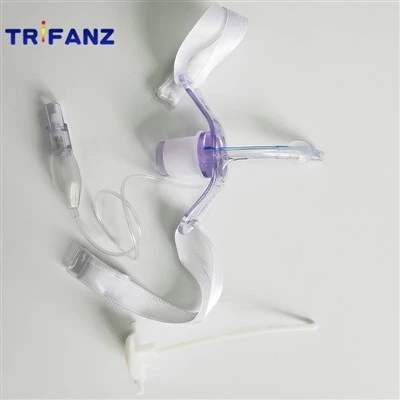
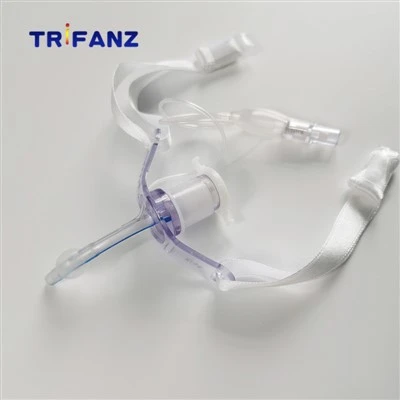
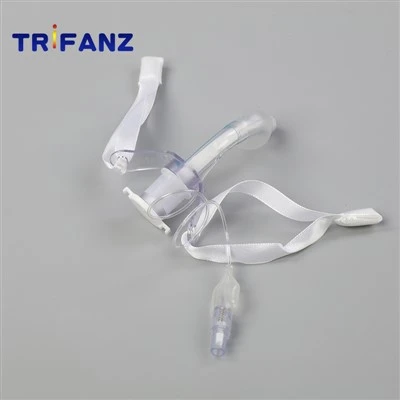
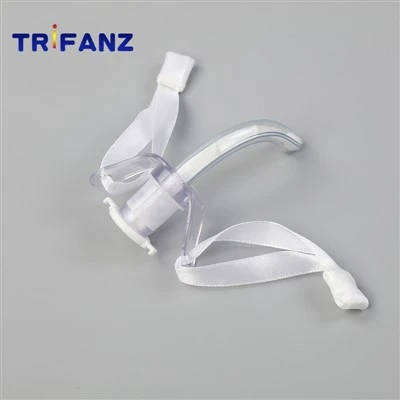
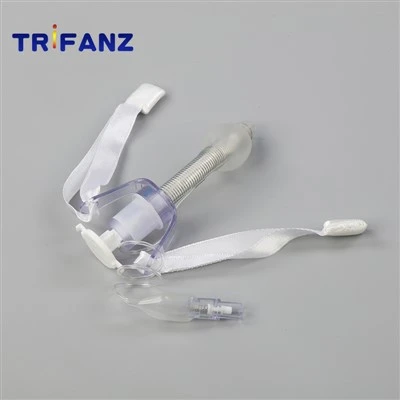
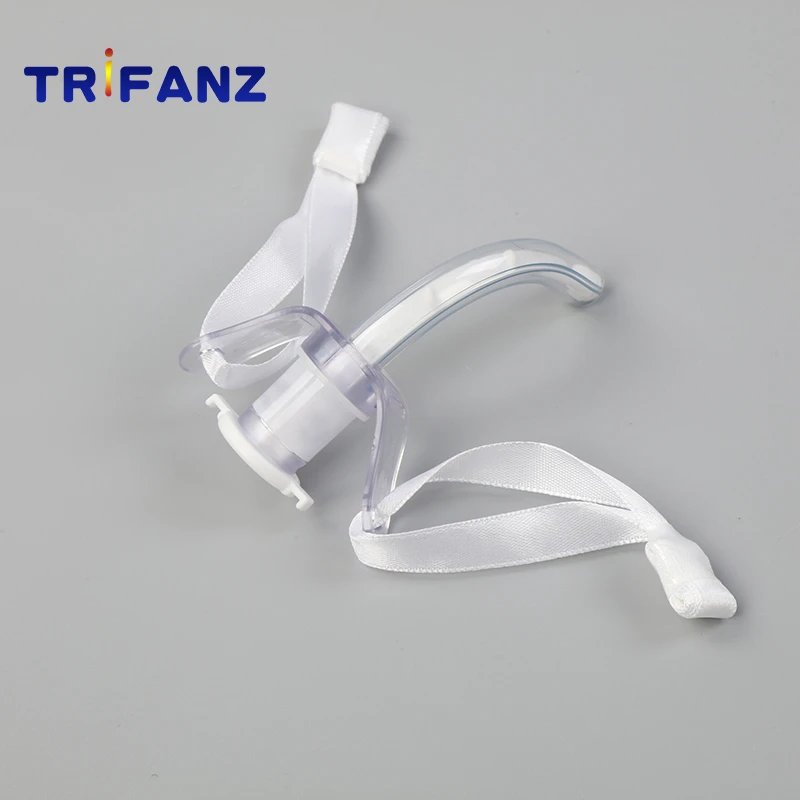
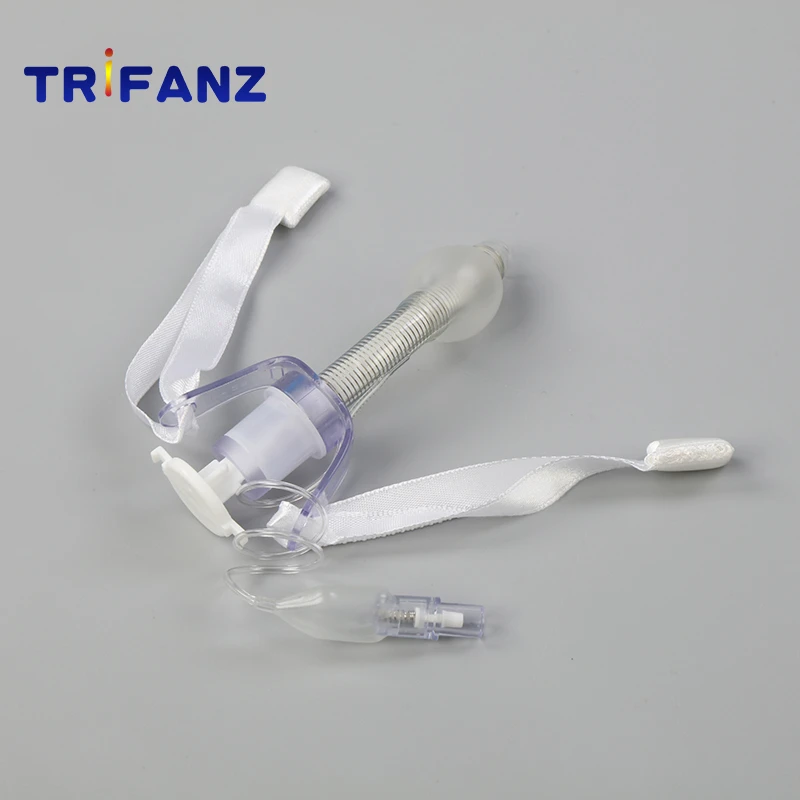
The main components of a tracheostomy tube are universal across the range of designs. The tube shaft is arc shaped and designed as either a single cannula or dual cannula tracheostomy tube . It may have a cuff to provide an airtight seal, to facilitate positive pressure ventilation and reduce the risk of aspiration. For ease of insertion it is supplied with an obturator. The neck flange helps secure the tracheostomy tube to the skin of the neck and stabilise its position. Short term tracheostomy tubes have a 15mm connector to allow attachment to airway equipment. Long term tracheostomy tubes may have a low profile flange which is more discreet but cannot be attached to airway equipment. Various tracheostomy accessories exist such as speaking valves, decannulation caps.
Advantages of Tracheostomy Tube
Enhanced patient comfort:Tracheostomy tubes are more comfortable for patients compared to endotracheal tubes, as they do not irritate the vocal cords or cause discomfort in the mouth or throat.
Ventilation support:Tracheostomy tubes are suitable for long-term ventilation needs, allowing patients to be more mobile and participate in activities while on mechanical ventilation.
Emergency access:Tracheostomy tubes provide a quick and reliable means of establishing an emergency airway in situations where upper airway obstruction occurs.
Improve respiratory hygiene:Tracheostomy tubes facilitate easier suctioning of secretions from the lower airways, reducing the risk of aspiration and improving respiratory hygiene.
Our factory
HangZhou Trifanz Medical Device Co., Ltd is located in the vibrant bio-industrial park of LinPing, Hangzhou. The park enjoys a beautiful environment and convenient transportation. We have own the production site: 1000 square 100,000 GMP clean workshops.
Our certificate
Passed the CE, ISO13485 system certification; can provide OEM / ODM services.
Experienced team
It has its own R&D team. A group of professional and technical personnel with nearly 20 years of experience in the industry.
Our products
Endotracheal tube, laryngeal mask airway, closed suction catheter,anesthesia breathing circuit and so on.
The length and the diameter of the trachea are roughly proportional to the size of the individual. A tracheostomy tube should be selected according to the outer diameter, the inner diameter and the length of the tube, rather than the manufacturer’s “size”, which is not standardised between models nor manufacturers. i.e. a “size 8” from one manufacturer is likely to have different dimensions to a “size 8” from another.
Dimensions of some size 8 standard length, cuffed, non-fenestrated tracheostomy tubes. Note the difference in inner diameter (ID), outer diameter (OD) and length. The outer diameter of the tracheostomy tube should be about ⅔ to ¾ of the tracheal diameter. As a general rule, most adult females can accommodate a tube with an outer diameter of 10mm, whilst an outer diameter of 11mm is suitable for most adult males. A tube should be no wider than necessary in order to minimize trauma to the tracheal wall and long term complications.
The inner diameter of the tracheostomy tube will influence the work of breathing in a spontaneously breathing patient and in turn the course of weaning from the ventilator. Special care is needed when checking the inner diameter of a tracheostomy tube. In the case of a dual cannula tube with the inner cannula in place, the quoted inner diameter on the packaging may or may not reflect this and may be much smaller than anticipated. In accordance with the International Standards Organisation System for size designation, when the 15mm connector is part of the outer cannula, the manufacturer is not obliged to quote the inner diameter of the inner cannula, of which use is optional.
The ideal length of a tracheostomy tube is such that the tube tip lies a few centimeters above the carina. A tube which is too short carries a higher risk of accidental decannulation or partial airway obstruction due to poor positioning. A tube which is too long may impinge on the carina leading to discomfort and coughing.The tracheostomy tube should be fastened securely to the patient’s neck. Ventilator tubing should be supported to reduce leverage on the tube with risk of tracheal injury and accidental decannulation.
Types of Tracheostomy Tube
A non-fenestrated single cannula tube with an air-filled cuff is suitable for most adult patients who require a temporary tracheostomy during critical illness. Dual cannula tubes are inherently safer as the inner cannula may be removed quickly in the event of obstruction and are therefore preferred for patients who continue to require a tracheostomy tube after discharge from the critical care unit. Staff caring for these patients should be knowledgeable about the design and function of these tubes. The type and size of a tracheostomy tube should be reviewed continuously as a patient’ s condition changes. A wide range of specialty tubes are employed to optimise vocalization and comfort.
Fenestrated tubes may be considered for patients undergoing weaning from ventilation, as they facilitate speech and reduce the work of breathing in comparison to non-fenestrated tubes. Staff should be aware that two types of inner cannulae are supplied with fenestrated tubes; one with a fenestration to promote air flow and speech; and one without a fenestration for suctioning. Due to the risk of surgical emphysema during positive pressure ventilation even when the non-fenestrated inner cannula is in place, the use of fenestrated tracheostomy tubes is not recommended in newly-formed stomas and should be limited to such time as the wound has healed sufficiently.
To reduce the risk of tracheal injury, cuff management should include careful inflation technique to the minimal occlusion volume (mov), followed by monitoring of inflation volume and cuff pressure. The cuff pressure should be maintained between 25-34 cmh2o, but preferably at the bottom end of this range, in order to minimize the risks of both tracheal wall injury and aspiration. Regular monitoring of cuff pressure is recommended at every shift (8-12 hourly), after any tracheostomy-related intervention, after any change in the cuff volume or upon development of an air leak.3 common causes of excessive cuff pressure include undersized tracheostomy tube, poor tube positioning, overinflated cuff and reduced lung compliance.
These tubes are usually used for patients who can protect their own airway, have an adequate cough reflex and most importantly can manage their own secretions. They remove the risk of tracheal damage caused by inflation of the cuff, may aid swallowing and communication with the concomitant use of a speaking valve. However, a speaking valve can only be used in patients who have airflow through their pharynx into their nose and mouth. Uncuffed tracheostomy tubes are frequently used for patients being cared for in the community or a hospital ward. A dual cannula uncuffed tube is preferred for safety and comfort as removal of the inner cannula for cleaning is not traumatic to the patient. Some tubes have low profile openings to make the tube more discreet.
Tracheostomy tubes are available in both standard and longer lengths. Standard length tubes are generally designed to accommodate patients with normal airway anatomy. However, the length and angulation of standard design tracheostomy tubes may be too short and unsuitable for some critical care patients, risking complications. Longer tracheostomy tubes are available with a fixed or adjustable flange (fixed or adjustable length). Fixed longer length tubes may be elongated in either the proximal portion (between the stoma and the trachea) or the distal portion of the tube (within the trachea). Extra proximal length is needed for patients with deep set tracheas i.E. Large neck due to obesity, goiter, neck mass. Extra distal length is needed for patients with tracheal problems but normal neck anatomy i.E. Tracheomalacia, tracheal stenosis. A flexible (reinforced) tracheostomy tube with an adjustable flange can be used in any of the above patients, although the locking mechanism of the neck flange may prove cumbersome for the patient, making it less suitable for long term use. In these cases, a dual cannula fixed longer length tube with the appropriate proximal or distal extension for the patient’ s anatomy may be more comfortable.
The hub
The hub of the tracheostomy tube is the part that protrudes from the patient’ s neck. It has a universal 15mm diameter so that it can connect to the ventilator circuit, resucitation bags, speaking valves, and caps. Therefore, any size tracheostomy tube that has a hub will fit with resuscitation equipment, speaking valves and caps. Although the tracheostomy hubs are universal, the inner and outer diameters of the tracheostomy tube have different sizes that correspond to the patient’ s unique anatomy.
Outer cannula or tube shaft
The outer cannula, or tube shaft, makes up the main component of the tracheostomy tube and is the part that is inserted into the trachea. It can either be fenestrated or non-fenestrated, cuffed or cuffless. The outer cannula comes in many different sizes. The size of the outer cannula be shown on the flange as the outer diameter (od). The outer diameter is the distance between the outside walls of the outer cannula, and is measured in millimeters. The outer diameter of the tracheostomy tube should be two-thirds to three-quarters of the tracheal diameter. The larger the outer cannula, the more difficult it will be for a patient to breathe with a speaking valve or cap in place. This is because the patient exhales around the tracheostomy tube and through the upper airway. Go to our section on speaking valves for more information on the design of speaking valves and how speaking valves work.
Inner cannula
Dual cannula (dc) tracheostomy tubes have an inner cannula. The inner cannula is placed inside the outer cannula. The inner cannula can be easily removed or replaced for cleaning and therefore can help to prevent obstruction such as from mucous plugs. There are different sizes of inner cannulas that must be matched to the corresponding outer cannula or it will not fit appropriately. The appropriate size comes packaged with the tracheostomy tube. Additional inner cannulas can be purchased separately as needed. Tracheostomy tubes have a color coded inner cannula, which corresponds to the matching hub of the tracheostomy tube, allowing for quick identification of the correct tube.
Flange (neck plate)
The flange is the part of the tracheostomy tube that extends from the outer part of the tracheostomy tube and has holes to attach the tracheostomy tube tie. The flange should lye flush against the skin on the neck. The flange has important information about the tracheostomy tube including the tracheostomy tube size, the size of the outer diameter (mm), the size of the inner diameter (mm), the brand and cuff type.
Tracheostomy tube tie
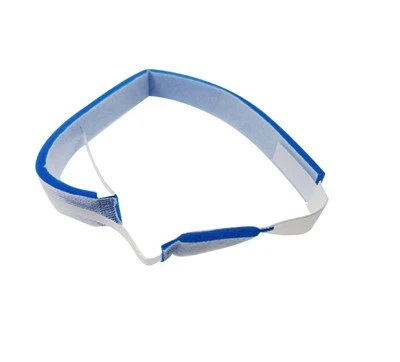
The trach tie is used to keep the tracheostomy tube in place to prevent accidental decannulation. It attaches to the flange and wraps around the patient’ s neck. Tracheostomy tube ties should be used unless the patient recently underwent local or free flap reconstructive surgery or other major neck surgery. This is to avoid neck pressure from the ties. A patient should not be discharged from the hospital with a tracheostomy tube sutured in place. One finger should be used to ensure that the tracheostomy tie is tight enough to prevent dislodgement. The edges of the tracheostomy flange may cause small ulcerations if the collar/ties that hold the tracheostomy tube in place are too tight.
Obturator
The purpose of the obturator, which is sometimes called a pilot, is to assist with the insertion of the tracheostomy tube. The inner cannula is removed and the obturator inserted which extends slightly beyond the tracheostomy tube. The obturator has a blunt tip and cushions the placement of the tube in the trachea to avoid tissue damage. Immediately following placement, the obturator is removed and replaced with the inner cannula.
Cuffed and cuffless tracheostomy tubes
A tracheostomy tube can be either cuffed or cuffless. The cuff of a tracheostomy is a balloon-like feature located around the outer cannula, near the bottom of the tracheostomy tube. This is termed a cuffed tracheostomy tube. The cuffed tracheostomy tube has a pilot line and pilot balloon as an indicator for cuff status. If the tracheostomy tube does not have the balloon-like feature, then the tracheostomy tube is termed cuffless. Most pediatric tubes are cuffless, even if the individual requires mechanical ventilation.
Tracheostomy tubes are made of a variety of medical grade materials: plastic, silicone, sterling silver, and stainless steel. Two types of plastics commonly used are (PVC) polyvinyl chloride and polyurethane. Plastic tubes are single patient use, and considered disposable. They are the most common tubes for institutional settings. Metal tubes, commonly referred to as Jackson tubes, are constructed of silver or stainless steel. They are heavier and more rigid than plastic, and typically cuffless. Many metal tracheostomy tubes do not have the 15mm hub as a standard part. For these reasons, they are rarely used in acute care facilities, but are sometimes utilized in the skilled nursing facility or the home care environment. Metal tubes are considered non-disposable and can be sterilized for multiple patient use.
If a metal tube is in use and it does not have a 15mm hub, this tube would not connect to the ventilator circuit or resuscitation equipment in case of emergency. Therefore, this tube should be replaced in critical care environment to a tube that has a standard 15mm hub. Metal tubes without a 15mm hub are also unable to connect to speaking valves or caps. The metal Jackson with improved inner cannula in size 4, 5, and 6 can be used with the PMV 2020 with the PMV 2020-S adapter which essentially provides a 15mm connection. Once the adapter is attached to the inner cannula, a speaking valve can be attached to the '0’ ring. For patient comfort, attach the ‘0’ ring and valve in sterile fashion, then insert the inner cannula.
Tracheostomy Tube Length
The length of the tracheostomy tube may also vary between tubes of the same inner diameter for different manufacturers. These variations are not commonly appreciated, but may have important clinical implications. If the tracheostomy tube is too short, the end of the tube can hit against the posterior tracheal wall. Tracheostomy tubes are available in standard lengths or extra lengths. Extra length tracheostomy tubes can be constructed with extra proximal length or distal length.
Extra proximal length tubes are for patients with thicker necks (obese patients). Standard tracheostomy tubes are too short and too curved for proper positioning due to the distance between the skin and the trachea. Therefore, standard tracheostomy tubes are more likely to be dislodged in patients with thick necks. Extra distal length tubes are used to bypass tracheal anomalies such as stenosis or malacia. Insertion of a longer tracheotomy tube relieved the obstruction and allowed 35 out of 37 patients to be weaned from the ventilator within 1 week. There are also adjustable tracheostomy tubes which have a movable flange so that the length of the tracheostomy tube from skin surface to trachea can be adjusted at the bedside. A locking mechanism on the flange maintains the chosen tube length. These tubes are used for patients with atypical anatomy. The locking mechanism often fails after a period of time and therefore these tubes are for short term use. Custom tubes are available with fixed flanges that can be made with specific sizes on an individual basis.
Tracheostomy tubes can be curved or angled. These features can help to improve the fit of the tracheostomy tube into the airway. Patients with a fenestrated tracheostomy tube may need a particular angled tracheostomy tube so that the fenestration fits in an appropriate place in the trachea, and not against the anterior or posterior tracheal wall.
HangZhou Trifanz Medical Device Co., Ltd is located in the vibrant bio-industrial park of LinPing, Hangzhou. The park enjoys a beautiful environment and convenient transportation. It is adjacent to Shanghai, Ningbo and other important ports. The company is an integrated science and technology innovation enterprise, mainly engaged in the research, development, production and sales of medical catheters in the fields of respiration, anesthesia, and severe diseases. It has its own R&D team: a group of professional and technical personnel with nearly 20 years of experience in the industry; own The production site: 1000 square 100,000 GMP clean workshops; among the company's employees, more than 80% of college and university staff account for the company's production and operation activities in strict accordance with national and international requirements to run the quality management system cloud operation, passed the CE, ISO13485 system certification; can provide OEM / ODM services.




Certificate


video
FAQ
We're professional tracheostomy tube manufacturers and suppliers in China, specialized in providing high quality custom service. We warmly welcome you to wholesale cheap tracheostomy tube from our factory.