





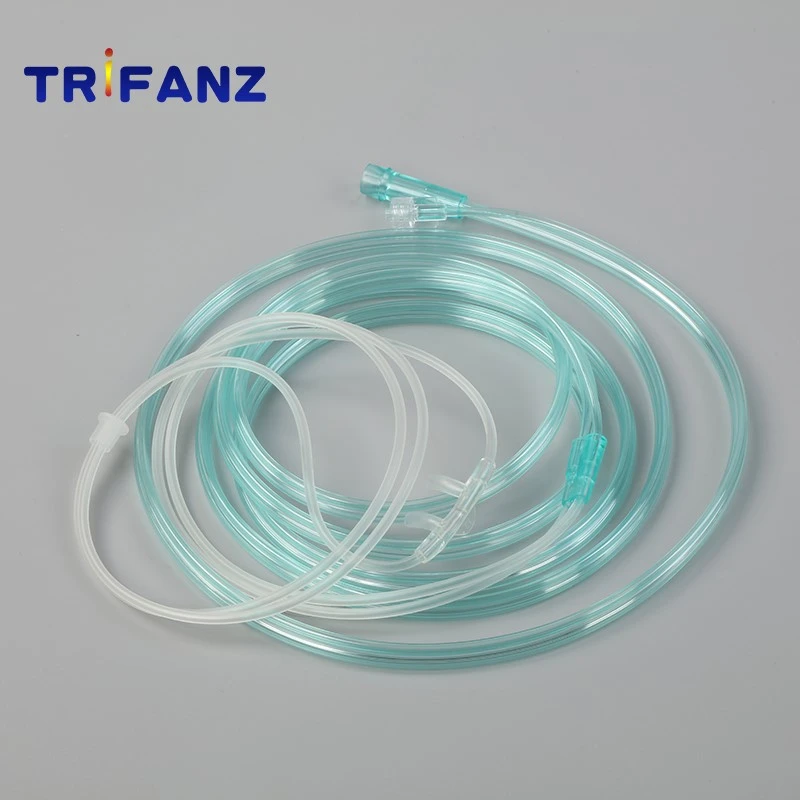
End-tidal carbon dioxide (PETCO2), similar to non-invasive blood pressure and blood oxygen saturation monitoring, is a relatively new non-invasive monitoring technique that has increasingly been applied in the monitoring of surgical anesthesia. It possesses high sensitivity and can not only monitor ventilation but also reflect circulatory function and lung blood flow. Currently, it has become an indispensable routine monitoring tool in anesthesia monitoring.
Clinical Applications
1.For Patients with Endotracheal Intubation: It can confirm whether the intubation is within the trachea and continuously monitor EtCO2.
2.Patient Transport: Continuous EtCO2 monitoring is possible during emergency transport, hospital transfers, or department transfers.
Cardiopulmonary Resuscitation (CPR) Patients: It provides indicators for assessing the effectiveness of CPR in emergency, cardiology, and surgical settings.
3.Decision-Making for CPR in Pulseless Patients: It aids in deciding whether to continue CPR for pulseless patients.
4.Lung Dysfunction Patients: It helps assess the severity of respiratory distress and CO2 retention.
5.Shock Assessment: It aids in determining the severity of circulatory failure caused by various reasons.
Ventilation Monitoring
In patients without significant cardiopulmonary disease, the V/Q ratio is normal. To a certain extent, PETCO2 can reflect PaCO2. A gradual increase in PETCO2 indicates inadequate ventilation, serving as a rapid and sensitive indicator.
Maintaining Normal Ventilation Volume
During general anesthesia or when using a ventilator for respiratory insufficiency, PETCO2 can be used to adjust ventilation volume, preventing inadequate or excessive ventilation, which could lead to hypercapnia or hypocapnia.
Confirming Tracheal Position
PETCO2 can help confirm the position of the tracheal tube.
Prompt Detection Of Ventilator Mechanical Failures
Mechanical failures such as disconnected connectors, circuit leaks, kinked tubes, tracheal obstruction, valve malfunction, and other issues can cause changes in PETCO2 waveforms. Common issues include disconnections between the tracheal tube and the corrugated tube, between the corrugated tube and the anesthesia machine, or at the connection with the respiratory bag. During head and facial surgeries, connectors may easily become disconnected, often unnoticed due to obstruction. With PETCO2 monitoring, the disappearance of the CO2 waveform, accompanied by a sudden drop in tracheal pressure, can be promptly detected. Kinked tubes, airway obstruction, or valve malfunction can also cause the disappearance or significant decrease of the CO2 waveform, accompanied by a sudden increase in airway pressure. Prompt detection and removal of the obstruction can turn a critical situation into a safe one.
Partial obstruction of the tube manifests as an increased PETCO2, accompanied by increased airway pressure, a sharper pressure waveform, and a lowered plateau. Obstructions should be promptly removed. Continuous PETCO2 monitoring during endotracheal intubation anesthesia is superior to other monitoring methods such as SpO2 and exhaled tidal volume, as it is more timely and accurate in detecting tracheal tube kinking, obstruction, dislodgment, displacement, and respiratory circuit disconnection. This is particularly important for endotracheal intubation anesthesia, especially when there is no exhaled tidal volume monitoring and the anesthetist is far from the patient's head, as it allows for timely detection and management of respiratory obstruction, maintaining airway patency and ensuring oxygen supply to the patient.
Monitoring Changes In CO2 Production
Intravenous injection of a large amount of NaHCO3 significantly increases PETCO2, serving as an indicator of cardiac output. Re-inhalation, elevated body temperature, sudden release of a tourniquet, and malignant hyperthermia all increase CO2 production. Moreover, a rapid increase in PETCO2 is a sensitive early indicator of malignant hyperthermia.
Monitoring Circulatory Function
In cases of shock, cardiac arrest, and pulmonary embolism, with reduced or stopped lung blood flow, the CO2 concentration rapidly drops to zero, and the CO2 waveform disappears. The disappearance of PETCO2 and a rapid decrease in PETCO2 lasting for more than 30 seconds indicate cardiac arrest. PETCO2 serves as an important non-invasive monitoring indicator for assessing the effectiveness of chest compressions during resuscitation and has greater prognostic value. At this time, PETCO2 levels correspond to changes in cardiac output.