





Use of common mask:
Anesthesia induction and maintenance: The depth of anesthesia needs to be sufficient in the insertion and maintenance phase of the mask to prevent respiratory reflexes. Whether muscle relaxants need to be given should be determined according to the needs of the operation. Anesthesia maintained inhalable O2/N2O/Isoflurane in combination with narcotic analgesics, intraspinal anesthesia, nerve block or local infiltration anesthesia.
Anesthesia monitoring: blood pressure, electrocardiogram, SpO2, and concentration of anesthetic gas.
Placement of common laryngeal mask: Better alignment, less irritation, and less complications with the standard placement method recommended by Brain. The timing of LMA removal was: the end of anesthesia, the patient's spontaneous breathing, and reflexes of the respiratory tract. When the eye was opened and the opening was fitted, no suction stimulation was given before the LMA was pulled out.
Judgement of correct position of common mask after insertion: After insertion of common mask, judge whether the ventilation is effective or not. The position of the mask is generally judged by thoracic exercise, chest auscultation, end-tidal carbon dioxide monitoring, and the presence or absence of air leaks, and the location of the mask is checked by fiberoptic bronchoscopy (FOB) if necessary. Reported in the literature: After inserting the common mask, check with FOB: 83% can see the glottis, and 54% can see the epiglottis.
Reported in the literature: Oropharyngeal Leak Pressure (OLP) of Oropharyngeal Mask averages 20cmH2O. Therefore, in the use of common laryngeal mask in general anesthesia, should maintain spontaneous breathing, to avoid prolonged use of positive pressure ventilation; especially for patients with poor lung compliance should avoid the use of positive pressure ventilation.
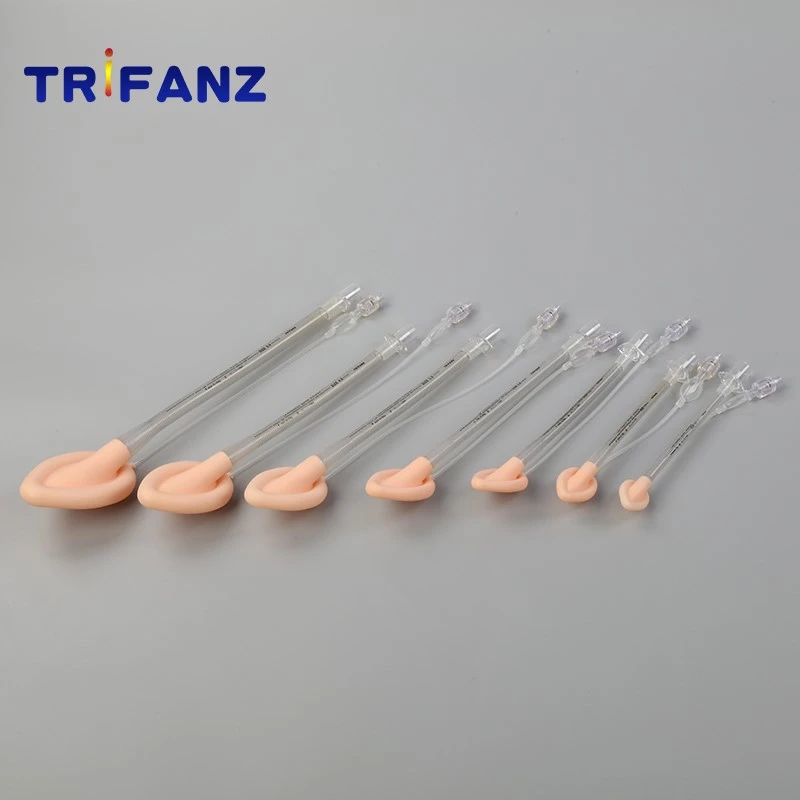
Application of common laryngeal mask in difficult intubation patients:
In the past decade, LMA has attracted extensive attention in the application of difficult airways (difficulty in mask ventilation or/and difficulty in intubation). Mainly applied in the following two aspects:
1. Application of Unexpected Difficulties in Intubation: After induction of anesthesia, it was found that intubation was difficult, especially in the case of an emergency that "cannot be intubated and can not be ventilated through the mask", LMA can be selected first. After the LMA is successfully inserted, the following three methods can be taken:
(1) The use of LMA can be performed directly on short body surface and extremity surgery while maintaining spontaneous breathing or IPPV;
(2) Tracheal intubation can be performed through the LMA.
Contact:Cindy
WhatsApp/WeChat:+86 19518555422
Email: sale4@trifanz.com