



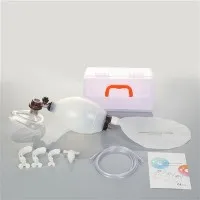


Do apnea masks make noise? That's a question I get asked a lot as an apnea mask supplier. Let's dig into this topic to see what's what.
First off, it's important to understand how apnea masks work. These masks are designed to deliver a continuous positive airway pressure (CPAP) to keep your airways open while you sleep. They're a game - changer for people with sleep apnea, a condition where your breathing repeatedly stops and starts during sleep.
Now, to the noise question. The short answer is, yes, apnea masks can make noise, but it's not always a big deal. There are a few reasons why an apnea mask might make noise.
One common source of noise is the air flowing through the mask and the tubing. When the CPAP machine pumps air through the system, it creates a kind of whooshing sound. This is normal and is usually a low - level, constant noise. Think of it as a bit like the sound of a fan running in the background. For some people, this sound can actually be soothing, like white noise that helps them fall asleep.
Another potential source of noise is the mask itself. If the mask doesn't fit properly, air can leak out around the edges. This leakage can cause a hissing sound, which can be quite annoying. A poorly fitting mask might also rub against your face, creating a scraping noise.
But don't worry! There are ways to reduce the noise from apnea masks. First, make sure you have the right size and style of mask. There are different types of apnea masks available, like Sleep Mask for Sleep Apnea and CPAP Nose And Mouth Mask. Each type has its own fit and features, so you can find one that suits you best.
When it comes to the air flow noise, you can try using a CPAP machine with a noise - reducing feature. Some modern machines are designed to operate more quietly. You can also place the machine on a soft surface, like a thick mat or a towel. This can help absorb some of the vibrations and reduce the noise.
If you're dealing with a hissing sound from a leaky mask, check the seal. Make sure the mask is properly adjusted on your face. You might need to tighten the straps a bit, but be careful not to make it too tight, as that can be uncomfortable. Some masks come with adjustable straps that make it easier to get a good fit.
Another thing to consider is the tubing. Make sure it's not kinked or twisted, as this can disrupt the air flow and cause more noise. You can also try using a longer or shorter tube, depending on your setup.


Now, let's talk about the impact of noise on sleep. For some people, even a small amount of noise can be a real problem. It can make it hard to fall asleep or stay asleep. If you're one of those people, it's extra important to find ways to minimize the noise from your apnea mask.
On the other hand, some people don't mind the noise at all. They might even find it comforting. It's all about personal preference.
As an apnea mask supplier, I've seen a lot of different situations. I've had customers who were really frustrated with the noise at first, but then found solutions that worked for them. And I've also had customers who didn't even notice the noise.
If you're in the market for an apnea mask and noise is a concern for you, don't hesitate to reach out. We can help you find the right mask and offer tips on how to reduce any unwanted noise. Whether you're a first - time user or looking to upgrade your current mask, we've got you covered.
We understand that sleep is precious, and a noisy apnea mask can really mess with your sleep quality. That's why we're committed to providing high - quality masks that are as quiet as possible. Our team of experts can guide you through the selection process, making sure you get a mask that fits well and operates quietly.
So, if you're interested in learning more about our apnea masks or have any questions about noise reduction, feel free to get in touch. We're here to help you get a good night's sleep and manage your sleep apnea effectively.
References
- "The Impact of CPAP Therapy on Sleep Quality" - Journal of Sleep Medicine
- "Noise and Sleep: A Review of the Literature" - Sleep Research Society