





Foley catheters are commonly used medical devices for draining urine from the bladder. They have been a staple in healthcare settings for decades, aiding patients who are unable to urinate naturally. However, a question that often arises is whether a Foley catheter can cause urinary incontinence. As a Foley catheter supplier, I am frequently asked about this concern, and in this blog post, I will delve into the scientific aspects of this issue.
Understanding Foley Catheters
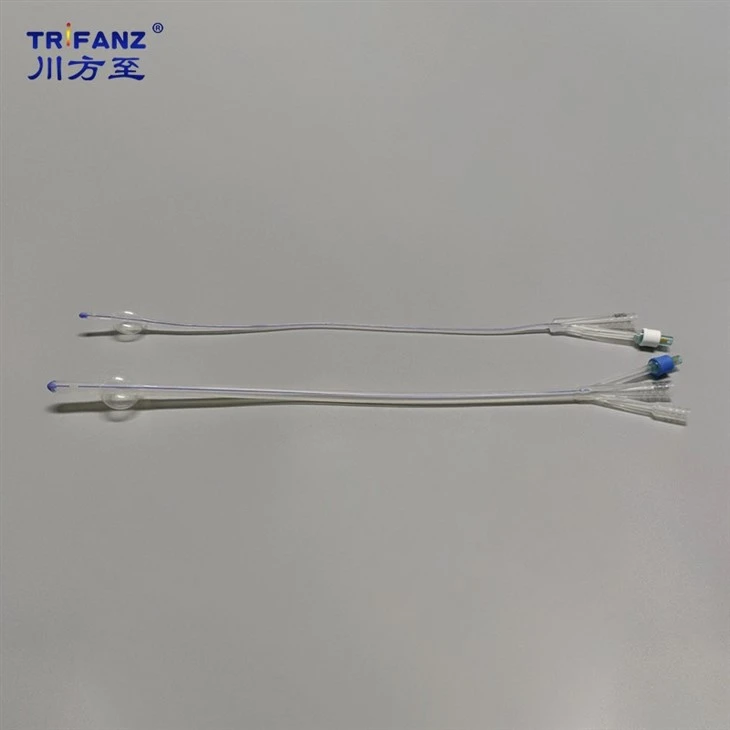
Before we explore the relationship between Foley catheters and urinary incontinence, it's essential to understand what a Foley catheter is. A Foley catheter is a flexible tube inserted into the bladder through the urethra to drain urine. It has a balloon at the tip that is inflated with water to keep the catheter in place. There are different types of Foley catheters, including 3 Way Silicone Foley Catheter and 3 Way Latex Foley Catheter. Silicone catheters are often preferred due to their biocompatibility and reduced risk of irritation, while latex catheters are more cost - effective. Another option is the Silicone Urinary Catheter, which offers similar benefits to silicone Foley catheters.
Mechanisms of Urinary Incontinence
Urinary incontinence is the involuntary leakage of urine. There are several types of urinary incontinence, including stress incontinence, urge incontinence, overflow incontinence, and functional incontinence. Stress incontinence occurs when there is increased abdominal pressure, such as during coughing, sneezing, or physical activity. Urge incontinence is characterized by a sudden, strong urge to urinate followed by involuntary leakage. Overflow incontinence happens when the bladder is unable to empty completely, leading to continuous dribbling of urine. Functional incontinence is related to physical or cognitive impairments that prevent a person from reaching the toilet in time.
Can a Foley Catheter Cause Urinary Incontinence?
Short - Term Use
In the short - term, a Foley catheter is not typically the direct cause of urinary incontinence. When a Foley catheter is properly inserted and maintained, it effectively drains urine from the bladder, preventing urine from accumulating and causing incontinence. However, there are some situations where short - term catheter use can lead to temporary urinary incontinence.

One possible cause is urethral irritation. The presence of the catheter in the urethra can cause irritation and inflammation, which may affect the normal function of the urethral sphincter. The urethral sphincter is a muscle that controls the flow of urine out of the bladder. If the sphincter is weakened or damaged due to irritation, it may lead to involuntary urine leakage.
Another factor is bladder spasm. The bladder may contract involuntarily around the catheter, causing urine to leak around the catheter. This is more likely to occur if the catheter is too large or if the balloon is over - inflated, which can stimulate the bladder wall.
Long - Term Use
Long - term use of a Foley catheter is associated with a higher risk of urinary incontinence. Prolonged presence of the catheter can lead to several complications that contribute to incontinence.
One of the main issues is bladder atrophy. When the bladder is constantly drained by a catheter, it loses its ability to stretch and contract normally. Over time, the bladder muscle weakens, and the bladder capacity decreases. This can result in overflow incontinence, as the bladder is unable to hold a normal volume of urine.
In addition, long - term catheter use can increase the risk of urinary tract infections (UTIs). UTIs can cause inflammation in the bladder and urethra, which can further damage the urinary sphincters and lead to incontinence. Repeated UTIs can also cause scarring in the urinary tract, which can affect the normal flow of urine and contribute to incontinence.
Preventing Urinary Incontinence Associated with Foley Catheters
As a Foley catheter supplier, I understand the importance of preventing complications associated with catheter use. Here are some strategies to reduce the risk of urinary incontinence:
- Proper catheter selection: Choose the appropriate size and type of catheter based on the patient's needs. A catheter that is too large can cause irritation and bladder spasms, while a catheter that is too small may not drain urine effectively.
- Correct insertion and maintenance: Ensure that the catheter is inserted correctly to minimize trauma to the urethra. Regularly clean the catheter and the surrounding area to prevent infections.
- Intermittent catheterization: Whenever possible, consider using intermittent catheterization instead of indwelling Foley catheters. Intermittent catheterization allows the bladder to function more normally and reduces the risk of bladder atrophy and other complications.
- Monitoring and management: Regularly monitor the patient for signs of urinary incontinence, such as leakage around the catheter or changes in urine output. If incontinence occurs, evaluate the cause and take appropriate measures, such as adjusting the catheter or treating any underlying infections.
Conclusion
In conclusion, while a Foley catheter is not always the direct cause of urinary incontinence, it can contribute to incontinence, especially with long - term use. Understanding the mechanisms by which a Foley catheter can affect urinary function is crucial for healthcare providers and patients. By taking appropriate preventive measures, such as proper catheter selection, correct insertion and maintenance, and intermittent catheterization, the risk of urinary incontinence associated with Foley catheter use can be minimized.
If you are interested in learning more about our Foley catheters or have any questions regarding their use, we encourage you to contact us for a procurement discussion. We are committed to providing high - quality Foley catheters and supporting you in your healthcare needs.
References
- Litwiller SE, et al. "Complications of indwelling urinary catheters." Urologic Clinics of North America. 2017.
- Resnick NM. "Urinary incontinence in the elderly." New England Journal of Medicine. 1989.
- Wagg A, et al. "Urinary catheterization: a review of indications, techniques, and complications." Canadian Urological Association Journal. 2015.