





Hey there! As a breathing filter supplier, I often get asked a bunch of questions about our products. One question that comes up quite a bit is, "Do breathing filters have a noise level?" Well, let's dive right into this topic and find out.
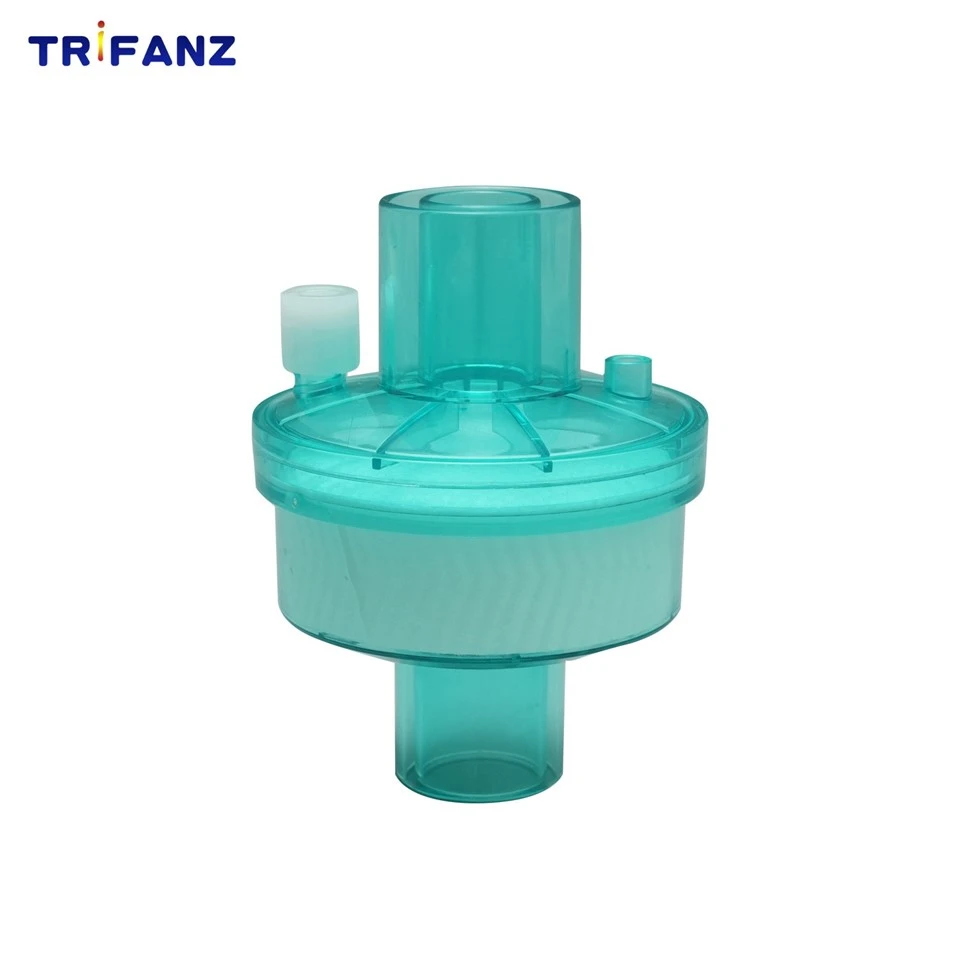
First off, let's understand what breathing filters are. Breathing filters are essential devices used in various medical and non - medical settings. They help to filter out harmful particles, bacteria, and viruses from the air we breathe. There are different types of breathing filters, like the Pulmonary Function Testing Filter, HME Hepa Filter, and HME For Ventilator.
Now, back to the noise level question. The short answer is yes, breathing filters can have a noise level. But it's not as simple as it sounds. The noise produced by a breathing filter depends on several factors.
One of the main factors is the design of the filter. Some filters are designed with a more open structure, which allows air to flow through more easily. These types of filters tend to produce less noise because there's less resistance to the air flow. On the other hand, filters with a denser structure, like HEPA filters, can create more noise. The dense material causes the air to have to work harder to pass through, which can result in a higher noise level.
The air flow rate also plays a crucial role. When the air flow rate is high, the noise level is likely to be higher as well. For example, in a ventilator system, if the ventilator is set to a high flow rate, the breathing filter attached to it will experience a greater volume of air passing through. This increased air movement can generate more noise.
Another factor is the quality of the materials used in the filter. Cheaper materials might not be as well - made, which can lead to more noise. High - quality filters are often designed to minimize noise while still providing effective filtration. They use materials that are specifically engineered to allow for smooth air flow and reduce turbulence, which in turn reduces noise.
Let's talk about the impact of noise from breathing filters. In a medical setting, excessive noise can be a real problem. For patients, it can be a source of discomfort and stress. Imagine being in a hospital bed, trying to rest, and having a noisy breathing filter constantly buzzing in your ear. It can make it difficult to sleep and can even affect the patient's overall well - being.
In a non - medical setting, like in an industrial environment where workers use breathing filters, noise can also be an issue. It can cause distractions and potentially lead to safety hazards. Workers need to be able to focus on their tasks, and a noisy breathing filter can make that difficult.
So, what can be done to reduce the noise level of breathing filters? Manufacturers are constantly working on improving the design of filters to make them quieter. They're using advanced materials and engineering techniques to optimize air flow and reduce turbulence. For example, some filters are designed with special baffles or chambers that help to dampen the noise.

In addition, proper maintenance of the breathing filters is also important. Over time, filters can get clogged with dirt and debris. A clogged filter can increase the resistance to air flow, which in turn can increase the noise level. Regularly cleaning or replacing the filters can help to keep the noise level down.
Now, if you're in the market for breathing filters, it's important to consider the noise level as one of the factors. You don't want to end up with a filter that's going to be a nuisance. Look for filters that are specifically designed to be quiet. You can also read reviews from other users to get an idea of how noisy a particular filter is.
As a breathing filter supplier, we understand the importance of providing high - quality, quiet filters. We offer a wide range of breathing filters, including the Pulmonary Function Testing Filter, HME Hepa Filter, and HME For Ventilator. Our filters are designed with the latest technology to ensure effective filtration and minimal noise.
If you're interested in learning more about our breathing filters or have any questions about noise levels or other aspects of our products, don't hesitate to reach out. We're here to help you find the right breathing filter for your needs. Whether you're a medical facility, an industrial company, or an individual looking for a personal breathing filter, we've got you covered.
In conclusion, breathing filters can have a noise level, but with the right design, materials, and maintenance, the noise can be kept to a minimum. So, when you're shopping for breathing filters, make sure to consider the noise factor and choose a filter that's both effective and quiet.
References:
- General knowledge about breathing filters from industry experience.
- Research on the impact of filter design and air flow on noise levels.