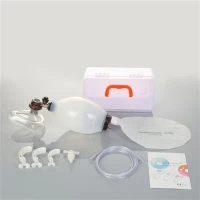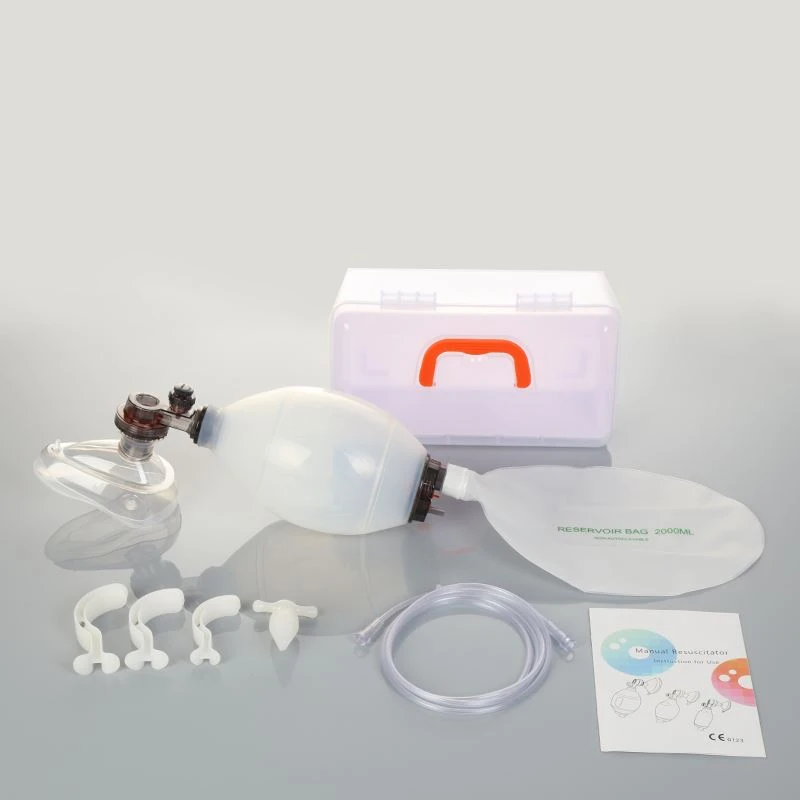
Basic Info:
The following is the usage of a silicone resuscitator set, also known as an ambu bag, resuscitation bag, or squeeze bag, which is suitable for cases of asphyxia, respiratory distress, or the need for increased oxygen supply, such as artificial respiration, pre-intubation high-concentration oxygen administration, post-intubation verification of tube placement, and auxiliary ventilation in case of ventilator failure.
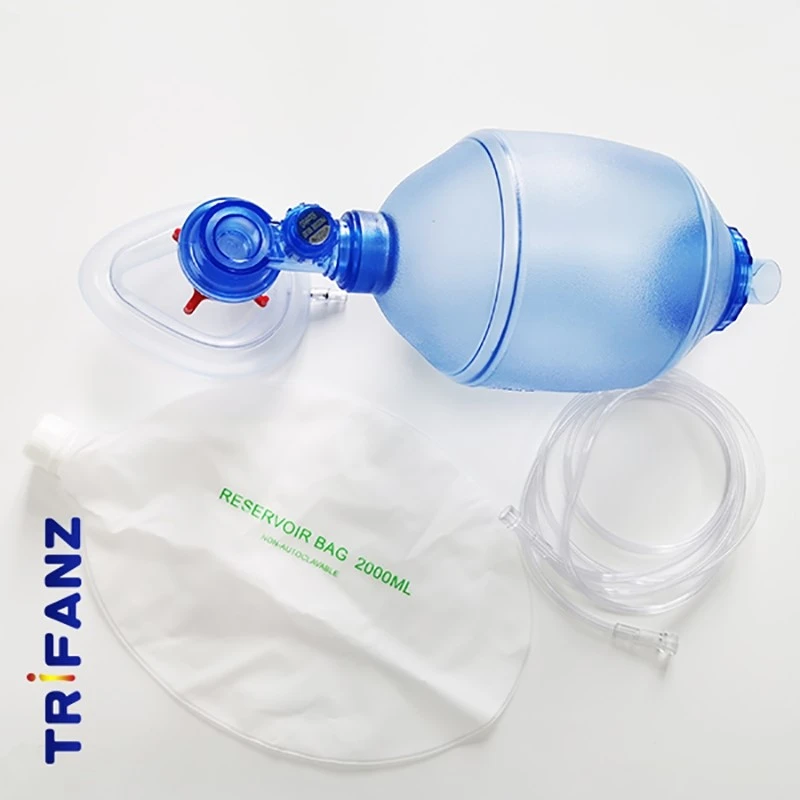
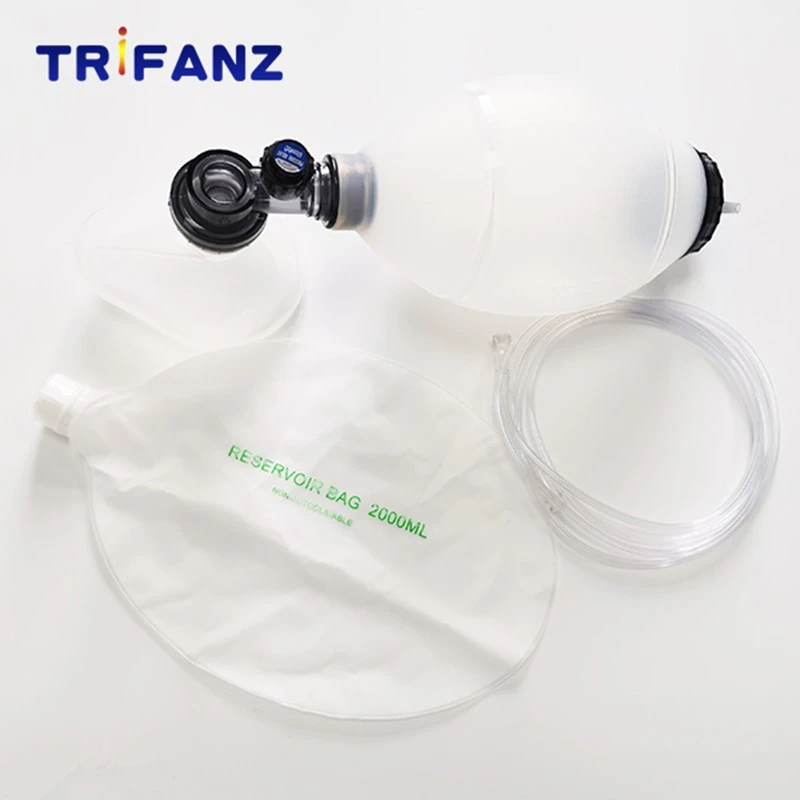
Preparation
1.Check that all components of the simple respirator are intact, including the one-way valve, bag, oxygen reservoir valve, oxygen reservoir bag, oxygen tubing, and face mask.
2.Assemble the face mask and reservoir bag, and connect the oxygen tubing to the inlet valve of the respirator. If oxygen is not being used, remove the oxygen reservoir valve and bag.
3..Position the patient supine with the head elevated slightly, remove any pillows, clear the oral and pharyngeal cavity of secretions and dentures (if necessary, suction), loosen the collar and waistband, expose the chest, and if necessary, insert an oral airway.
Airway Opening
1.The rescuer should be positioned behind the patient's head, tilt the patient's head backward, and support the chin upwards to keep the airway open. The method of opening the airway varies with the patient's age:
Adult: The line connecting the mandibular angle and earlobe is perpendicular to the patient's long axis.
Child (1-8 years): The line connecting the mandibular angle and earlobe forms a 60° angle with the patient's long axis.
Infant (less than 1 year): The line connecting the mandibular angle and earlobe forms a 30° angle with the patient's long axis.
Prevent tongue biting and tongue falling backward.
Using the Simple Respirator
1.Secure the face mask tightly over the nose and mouth using the "EC" hand position, with the C position pressing the mask and the E position maintaining airway patency.
2.Squeeze the bag with the other hand to deliver air into the lungs. When squeezing, note:
The tidal volume is usually 400~600ml (about one-third of the bag).
Squeeze the bag regularly to provide sufficient inspiration/expiration time. The squeeze frequency varies with the patient's age, typically 1012 times/minute for adults and 1420 times/minute for children.
Squeeze the bag with moderate pressure, avoiding rapid or irregular squeezing. If the patient's airway pressure is too high, turn the pressure valve downward to increase the delivery pressure.
Observing Patient Response
1.Watch the patient's chest rise and fall with each squeeze of the bag.
2.Observe changes in the patient's lip and facial color through the transparent part of the mask.
3.Observe the proper functioning of the one-way valve through the transparent cover.
4.Observe whether the mask is misty during exhalation.
Conclusion of Operation
Position the patient comfortably and tidy up the equipment.
Wash hands and document the procedure.
Clean and disinfect the simple respirator for future use.
Disassemble the components of the simple respirator in order and soak them in disinfectant.
Rinse all components with sterile distilled water to remove residual disinfectant.
The face mask, tubing, and reservoir bag can be wiped down with 95% alcohol for disinfection; soaking in disinfectant is not recommended as it may damage them.
For patients with special infections, use ethylene oxide fumigation for disinfection.
Ensure all components are completely dry and check for damage before reassembling them in order.
Perform a test to ensure readiness for use.
Please note that when using a simple respirator, it is crucial to follow the operating instructions to avoid unnecessary harm to the patient. Meanwhile, during use, closely monitor the patient's vital signs and responses to adjust the treatment plan promptly.
Hot Tags: silicone resuscitator set, China silicone resuscitator set manufacturers, suppliers, factory, Resuscitator-PVC