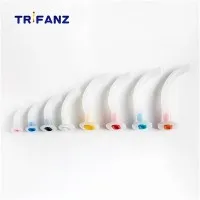
A cuffed endotracheal tube is a specialized medical device used in airway management during various medical procedures, particularly in anesthesia and critical care settings. It is a type of endotracheal tube that includes an inflatable cuff located near the distal end of the tube.
Components of a cuffed endotracheal tube:

The main tube is typically made of flexible, medical-grade materials PVC (polyvinyl chloride)
The high volume and low pressure cuff designed to create a seal within the trachea, preventing the escape of gases and minimizing the risk of aspiration (inhalation of fluids or gastric contents into the lungs).


Connected to the cuff, there is a separate inflation tube that extends outside the patient's mouth.
The inflation tube allows for the inflation and deflation of the cuff using a syringe with air or another suitable inflation medium.
Some cuffed endotracheal tubes have a small opening called a Murphy's eye near the tip of the tube.
The Murphy's eye provides an alternate pathway for ventilation in case the main opening becomes obstructed.


Many cuffed endotracheal tubes include a radiopaque line along the length of the tube.
This feature aids in visualizing the position of the tube on X-rays, ensuring proper placement within the trachea.
Cuffed endotracheal tube detail:
|
Original: Zhejiang, China Certification: ISO13485, FSC, FDA etc. Price: Negotiable Material: PVC |
Packaging: Individual paper-plastic pouch Sterilization: EO sterilization Size: 2.0#-10.0# Payment term: TT, LC, Western Union, Paypal |
Delivery date: Negotiable Warranty: 3 years Brand name: Trifanz/ OEM
|
Size of cuffed endotracheal tube:
|
ID.SIZE |
REF NO. |
ID.SIZE |
REF NO. |
ID.SIZE |
REF NO. |
|
2.0# |
98.04.446 |
5.0# |
98.04.462 |
8.0# |
98.04.486 |
|
2.5# |
98.04.448 |
5.5# |
98.04.466 |
8.5# |
98.04.490 |
|
3.0# |
98.04.450 |
6.0# |
98.04.470 |
9.0# |
98.04.494 |
|
3.5# |
98.04.452 |
6.5# |
98.04.474 |
9.5# |
98.04.496 |
|
4.0# |
98.04.454 |
7.0# |
98.04.478 |
10.0# |
98.04.498 |
|
4.5# |
98.04.458 |
7.5# |
98.04.482 |
- |
- |
Benefit:
1.Soft medical grade PVC tube
2.Black glottic positioning line
3.Murphy eys, smooth bevel
4.Standard 15mm connector
5.Blue X-ray opaque line
6.High volume low pressure cuff
FAQ:
Hot Tags: cuffed endotracheal tube, China cuffed endotracheal tube manufacturers, suppliers, factory, Oral Endotracheal Tube, Armored Endotracheal Tube, Tracheal Tube